Kimbap vs Sushi: 7 Key Differences You’ll Love to Know
While they may appear as similar rice and seaweed rolls, kimbap and sushi possess distinct culinary philosophies, histories, and flavors that tell a rich story. A first encounter with kimbap can be surprising for those expecting the familiar taste of sushi; instead of tangy rice and raw fish, one finds a savory mix of sesame oil, hearty cooked vegetables, and seasoned meats. Understanding these differences deepens our appreciation for each dish and highlights the unique cultural narratives they embody. Discover the key distinctions that make each of these East Asian rolled dishes a beloved staple around the world.
Origins and Background of Kimbap and Sushi
Kimbap vs. Sushi Origin Stories
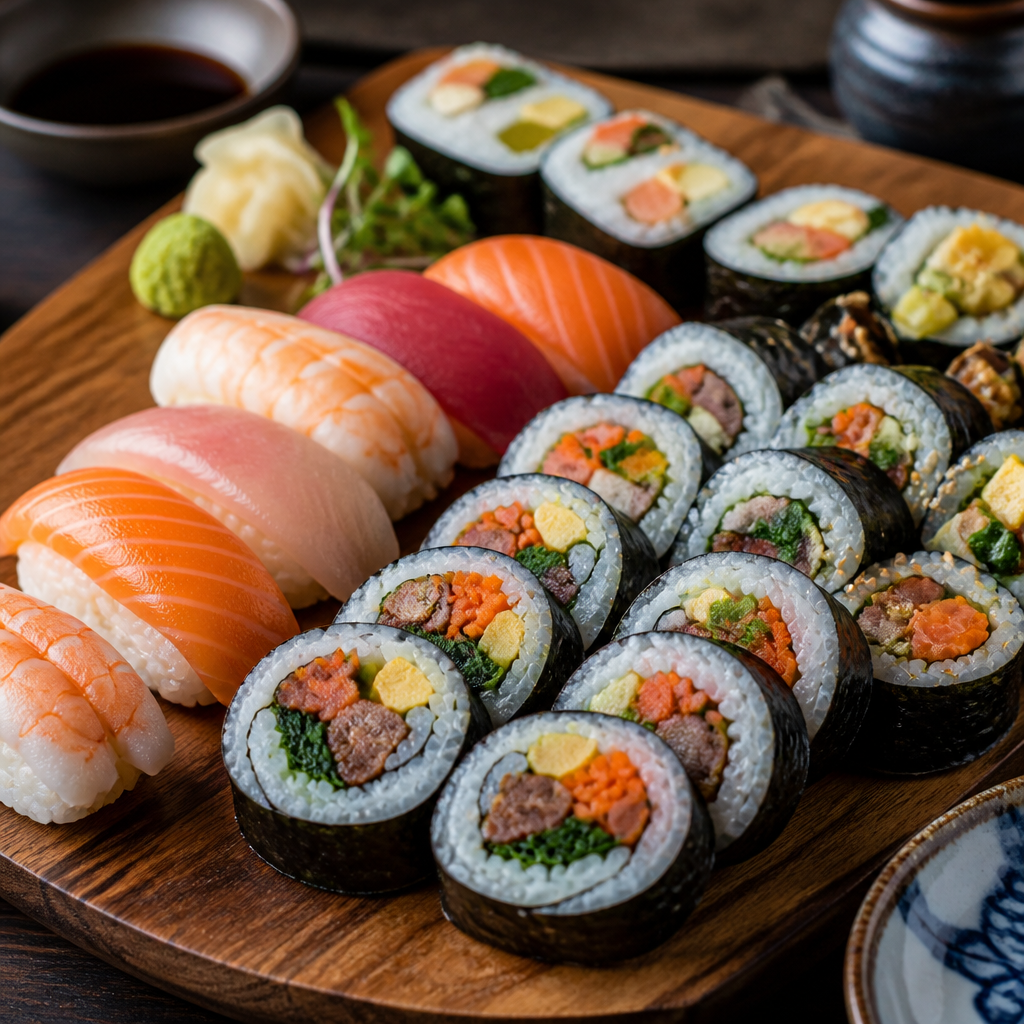
Kimbap, meaning "seaweed rice" in Korean, features cooked rice and various ingredients rolled in dried seaweed (_gim_). Its emergence in Korea is often linked to the early 20th century, during the period of Japanese rule (1910–1945). While exact origins are debated, many believe kimbap was influenced by Japanese _norimaki_, a type of sushi roll. However, Koreans adapted the concept with local ingredients and flavors, creating a distinct dish.
As Dr. Katarzyna Cwiertka, a Professor of Modern Japan Studies at Leiden University, explains, Koreans didn't simply copy it. They adapted it with local ingredients and flavors, creating a distinct dish separate from Japanese sushi.
This adaptation truly showcases Korea's culinary spirit—taking an idea and making it uniquely their own. Kimbap gained widespread popularity in Korea after 1945, becoming an affordable and portable meal for picnics and outings.
Sushi, a famous Japanese dish, has a much longer history, with roots tracing back to the 8th century. Its earliest form, _narezushi_, was a method for preserving fish by fermenting it in rice, where the rice was often discarded. The modern sushi we recognize today, particularly _nigiri-zushi_ (small mounds of vinegared rice topped with ingredients), was developed in Tokyo (then Edo) in the 1820s as a form of "fast food."
A fundamental difference between kimbap and sushi lies in their rice preparation. To summarize the core distinctions:
- Rice Seasoning: Kimbap uses savory sesame oil and salt, while sushi uses a sweet and tangy mixture of rice vinegar, sugar, and salt.
- Core Ingredients: Kimbap favors a variety of cooked and pickled ingredients, whereas traditional sushi often highlights fresh, raw fish.
- Serving Temperature: Kimbap is typically enjoyed at room temperature, while sushi is served cool or chilled to emphasize freshness.
What Goes Into Kimbap and Sushi?
Kimbap Rice vs. Sushi Rice
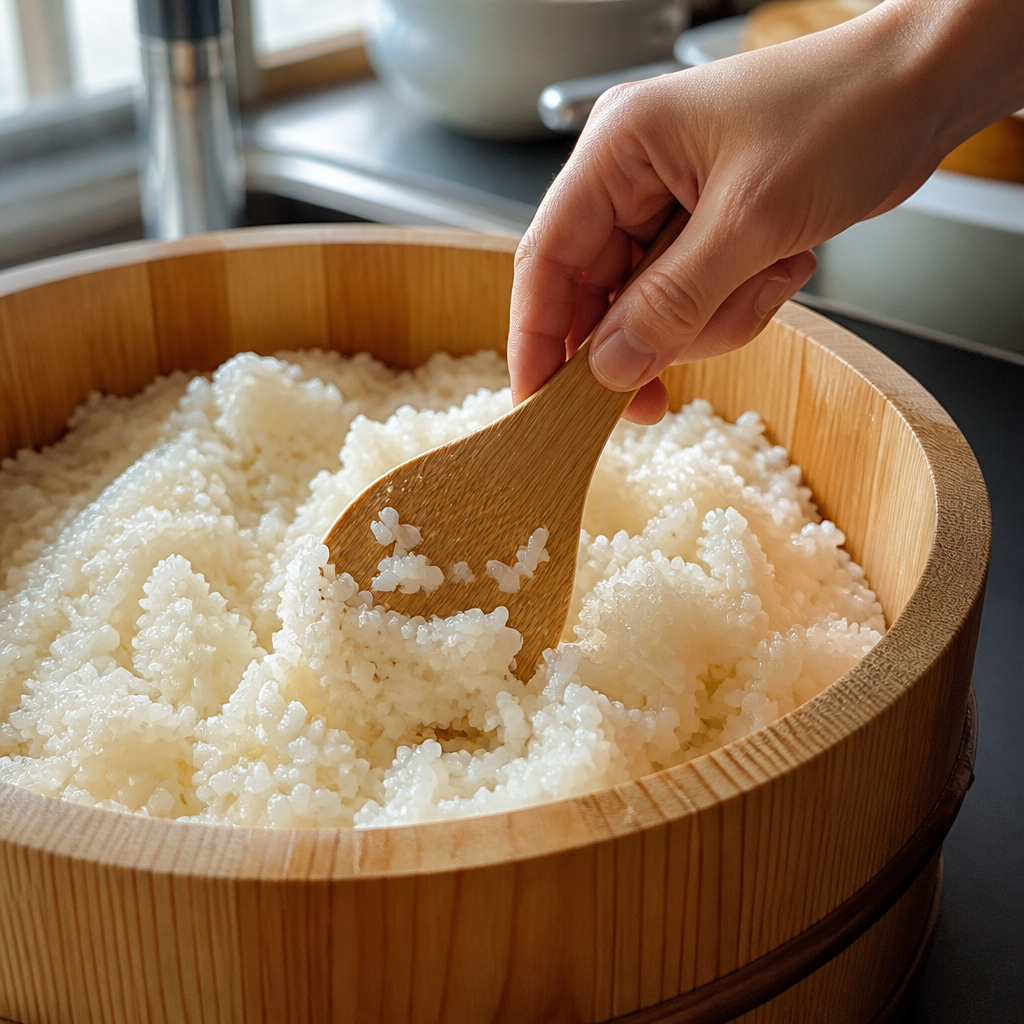
The rice is the foundation of both kimbap and sushi, but its preparation and seasoning are key differentiators. Kimbap rice is traditionally made with short-grain white rice seasoned with savory sesame oil and a pinch of salt. This gives it a distinctive nutty and savory flavor, a hallmark of Korean cooking. The sesame oil makes the rice fragrant and creates a hearty, satisfying base.
In contrast, sushi rice, known as _shari_ or _sumeshi_, is prepared with a mixture of rice vinegar (_su_), sugar, and salt, resulting in a sweet-tangy flavor. This seasoning is crucial for balancing the often rich or delicate tastes of raw fish and other sushi ingredients. The vinegar in sushi rice also acts as a mild preservative. Both dishes traditionally use sticky, short-grain japonica rice varieties, but the seasoning completely alters their taste profiles. Sushi rice is ideally served at body temperature during preparation to enhance the perception of freshness, while kimbap rice is used at room temperature or slightly warm.
Kimbap Seaweed vs. Sushi Seaweed
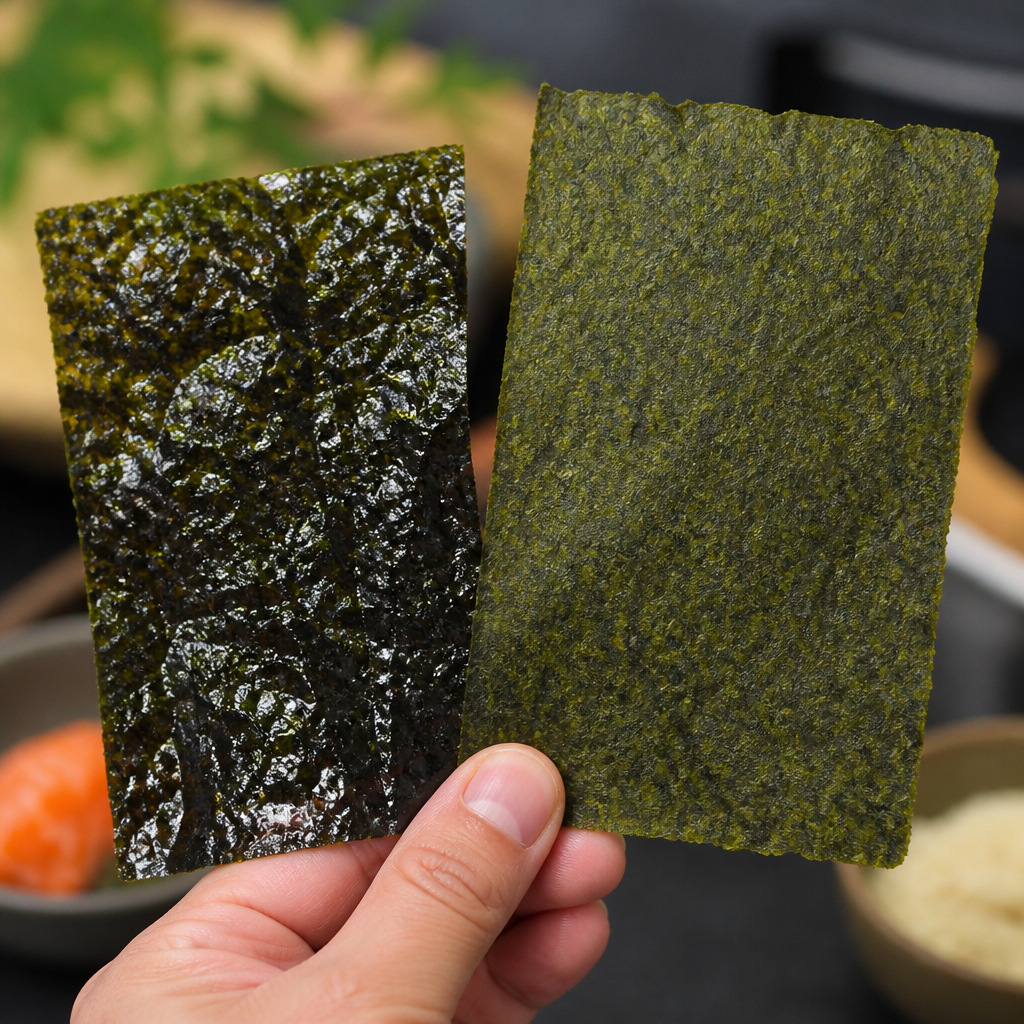
The seaweed wrapper is another significant element distinguishing kimbap and sushi. Kimbap uses _gim_, which is Korean roasted seaweed typically seasoned with sesame oil and salt. This seasoning imparts a robust, nutty, and savory flavor that is a major contributor to kimbap's overall taste.
Sushi, on the other hand, employs _nori_, Japanese seaweed that is generally unseasoned or only lightly toasted. Its primary role is to act as a neutral wrapper, allowing the flavors of the vinegared rice and fillings to stand out. _Gim_ tends to be thicker and crispier due to the oil coating, while sushi _nori_ is thinner and more pliable, ideal for tight rolling. Both _gim_ and _nori_ originate from red algae species and are highly nutritious, offering protein, iodine, and vitamins. However, _due to its oil content, seasoned gim has a shorter shelf life and is best consumed soon after opening_.
Kimbap vs. Sushi Fillings
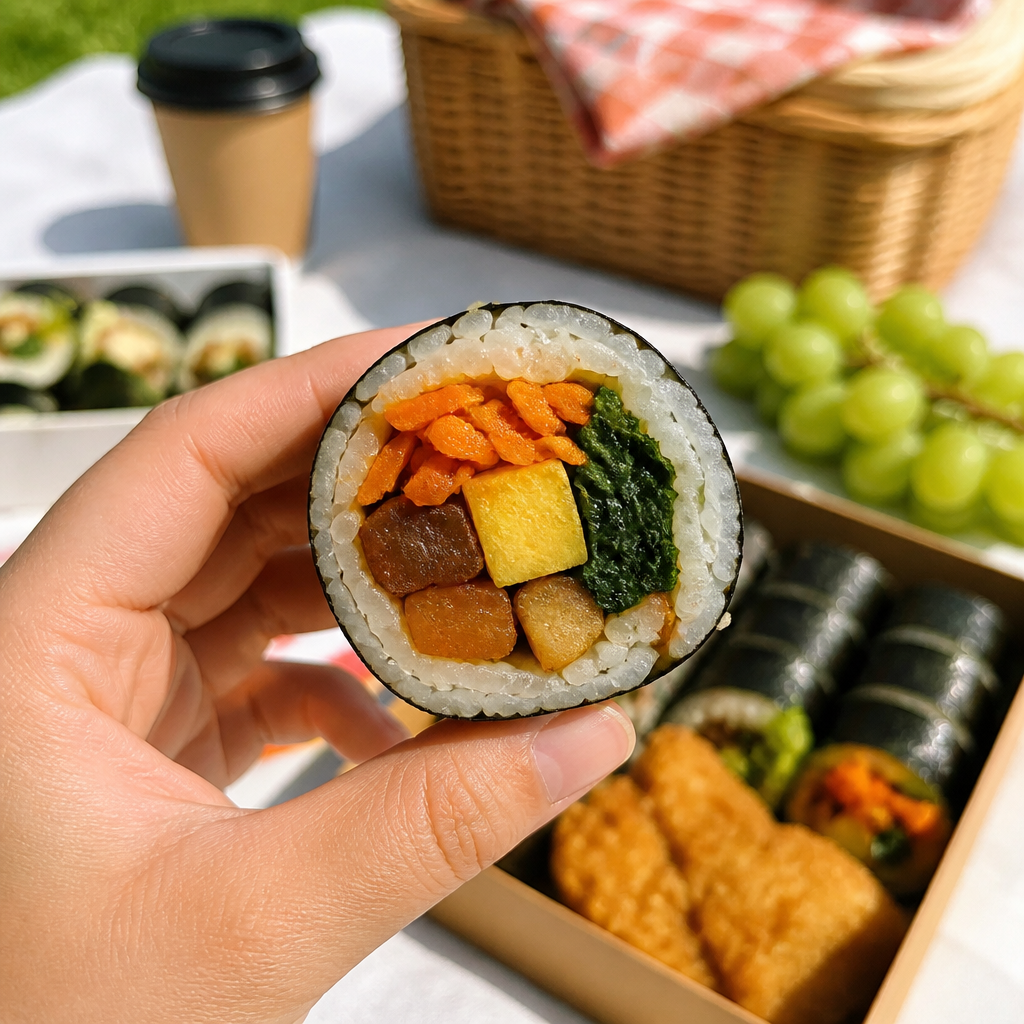
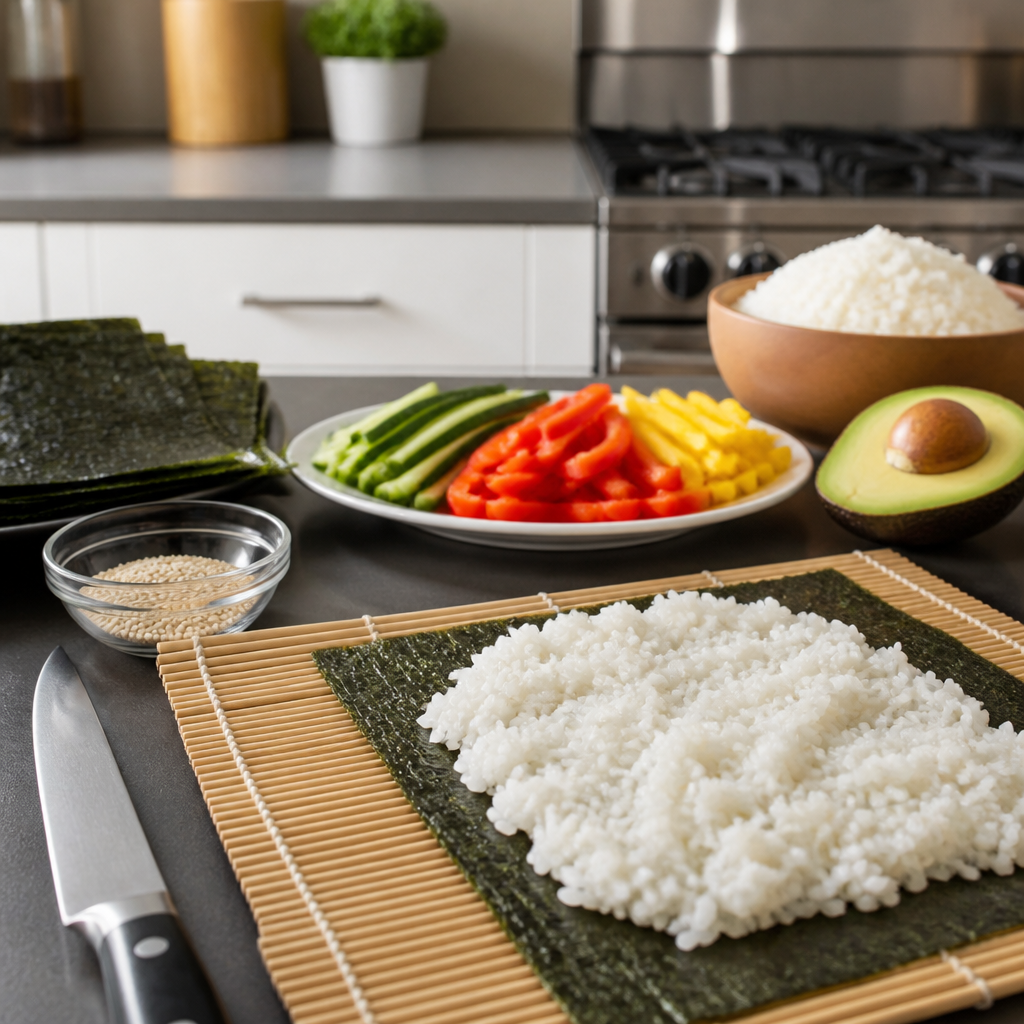
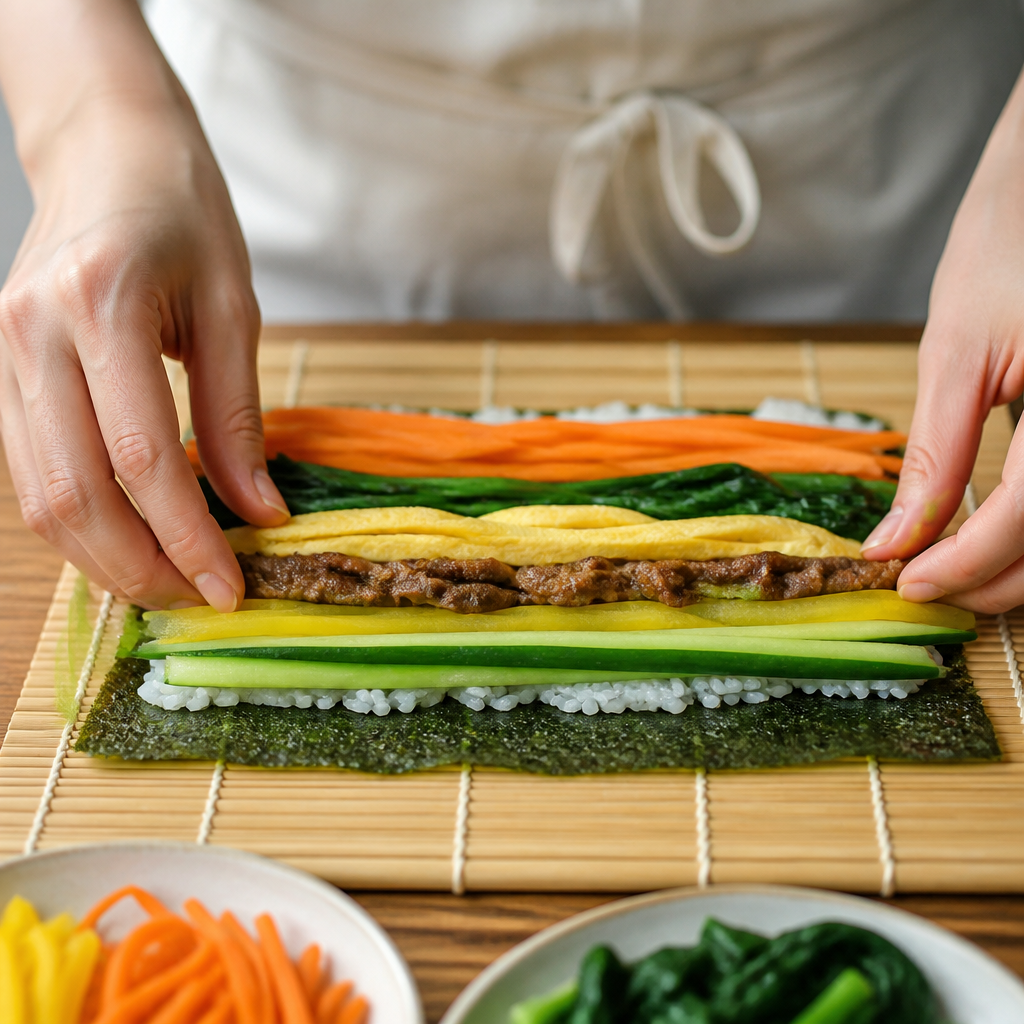
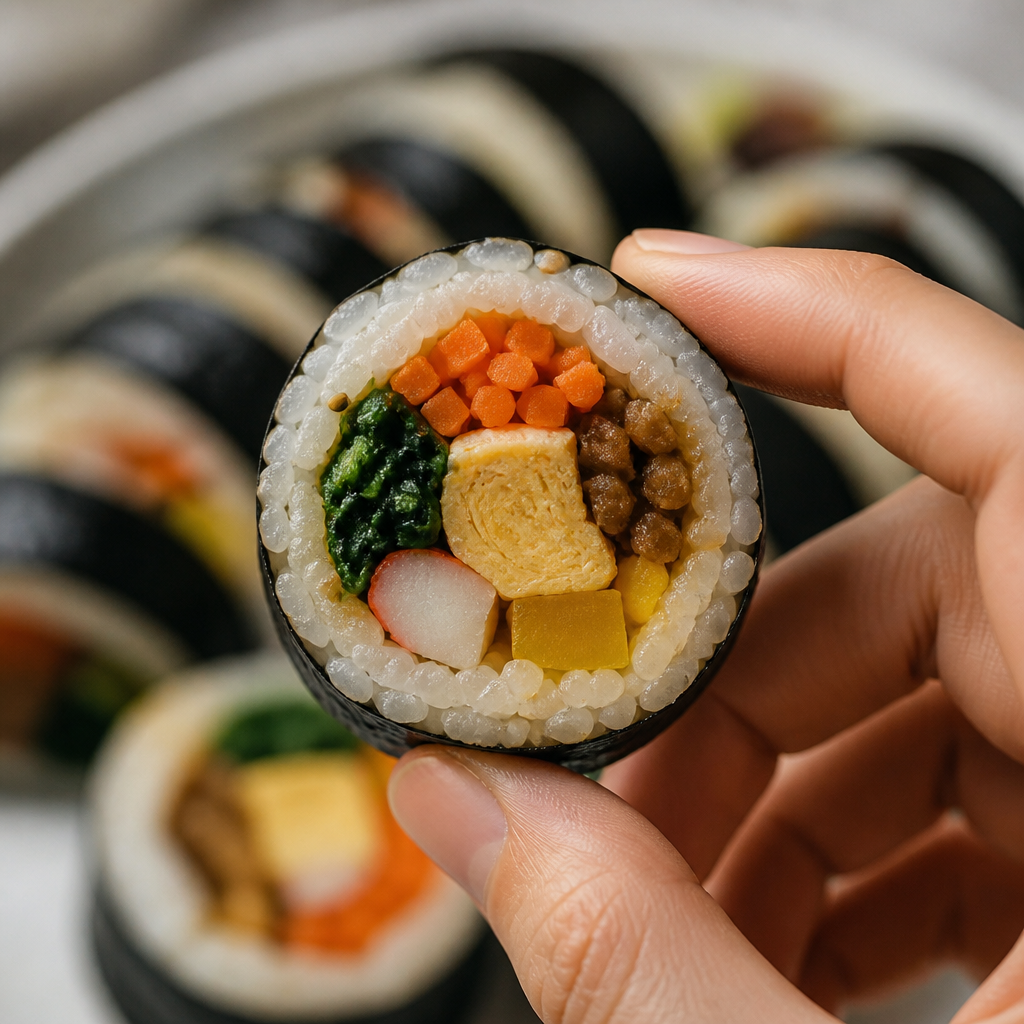
The choice and preparation of fillings represent one of the most apparent differences between kimbap and sushi, showcasing their distinct culinary traditions. Kimbap traditionally features a variety of fully cooked ingredients, including seasoned vegetables (_danmuji_ or yellow pickled radish, spinach), egg strips, and cooked proteins like _bulgogi_ (marinated beef) or ham.
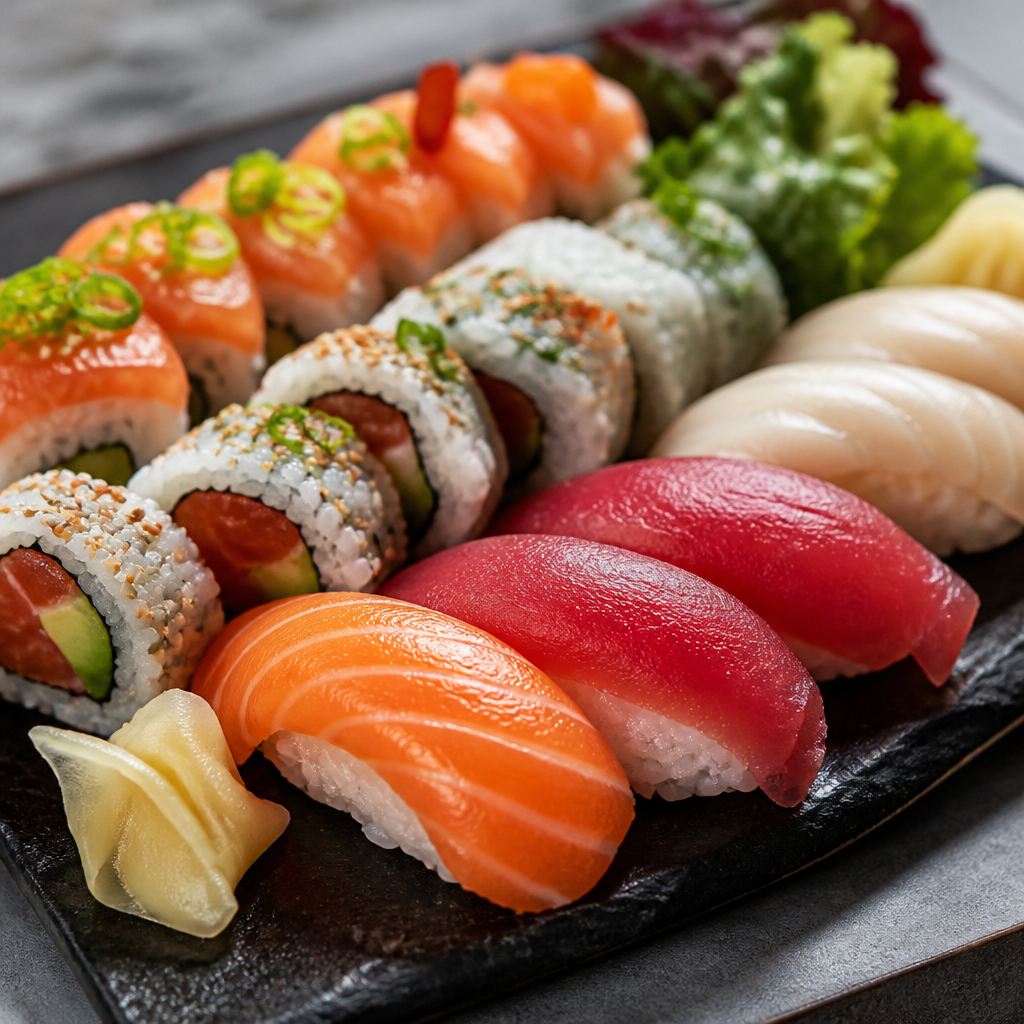
In contrast, sushi frequently highlights raw fish like tuna or salmon, celebrating the freshness and quality of the seafood. Cooked options like shrimp or eel are also popular, alongside vegetables like cucumber and avocado. The minimalist approach to sushi fillings allows the natural flavors of the main ingredients to shine.
Chef Hooni Kim, a Michelin-starred chef, explains that kimbap embodies the Korean home cooking philosophy where numerous seasoned components come together to create a wonderful harmony.
This contrasts with sushi's focus on elevating single, high-quality ingredients. Kimbap fillings reflect Korean _banchan_ (side dish) traditions, while sushi fillings adhere to Japanese principles of showcasing seasonality and freshness.
| Feature | Kimbap | Sushi |
|---|---|---|
| Rice Seasoning | Sesame oil & salt | Rice vinegar, sugar, & salt |
| Seaweed | Seasoned & roasted (_gim_) | Unseasoned & toasted (_nori_) |
| Main Fillings | Cooked (vegetables, meat, egg) | Primarily raw fish; some cooked items |
| Primary Flavor | Savory, nutty, and hearty | Tangy, clean, and umami |
How Do Kimbap and Sushi Compare in Taste and Nutrition?
Kimbap vs. Sushi Taste Difference
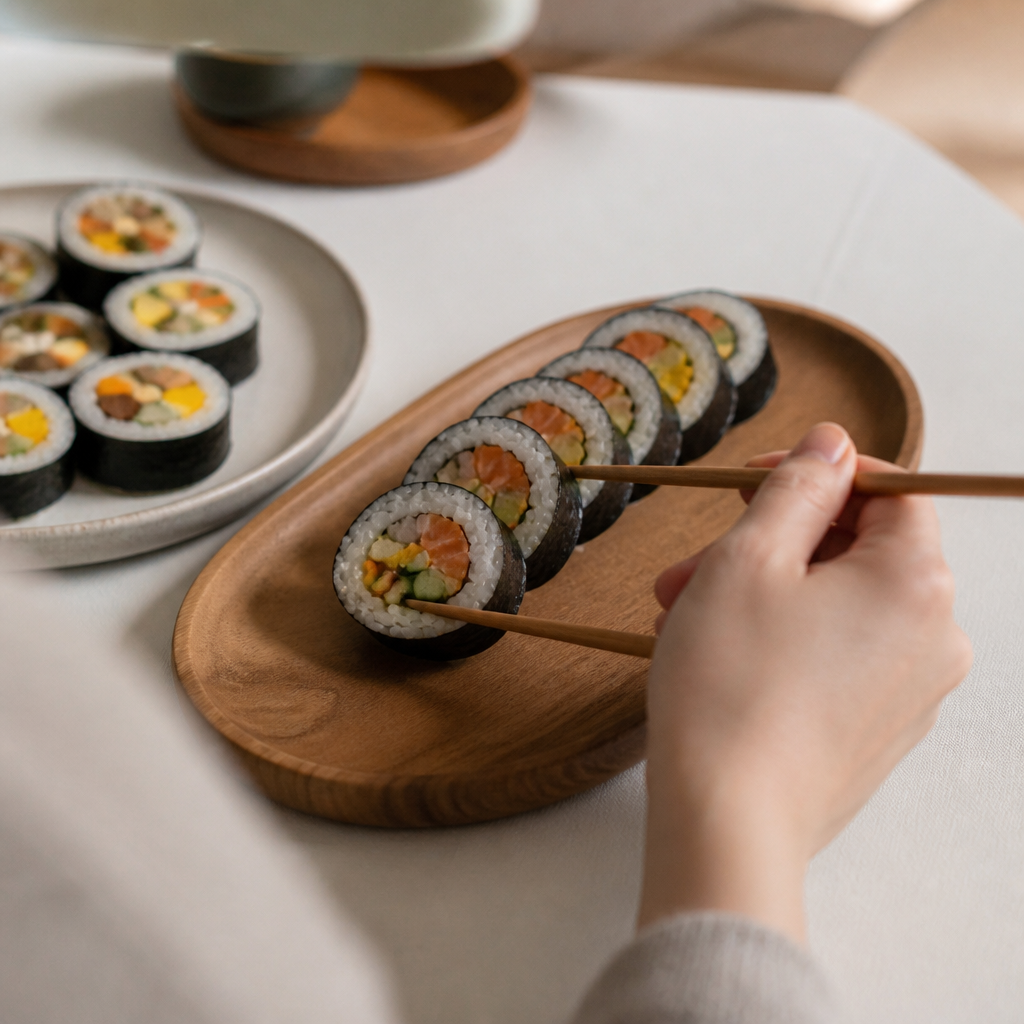
The taste experience of kimbap and sushi is truly distinct. Kimbap typically tastes savory, nutty, and slightly sweet, largely due to the generous use of sesame oil in the rice and the individual seasoning of its numerous cooked components. The combination of seasoned vegetables, egg, and cooked proteins creates a hearty and cohesive flavor profile with layered complexity.
Sushi, conversely, offers a clean, tangy, and rich umami taste. This flavor arises from the vinegared rice, which provides a bright sourness and subtle sweetness that perfectly complements the fresh, often raw, fish. Sushi's simpler approach focuses on the natural flavors of its high-quality ingredients, with condiments like soy sauce and wasabi added by the diner. Kimbap carries a strong roasted sesame scent, while sushi has a subtle vinegar aroma complemented by oceanic notes from the fish.
Kimbap vs. Sushi Nutrition
Both kimbap and sushi can be part of a healthy diet, though they offer different nutritional benefits. While sushi with raw fish may provide more beneficial omega-3 fats and lean protein, kimbap often offers a wider variety of vegetables and fiber. Sodium content and portion size are crucial considerations for both.
A typical kimbap roll (around 300g) can contain 400-550 calories, 8-15g of protein, and 2-4g of fiber. A simple sushi roll may have fewer calories (200-300), but rolls with tempura or mayonnaise can reach 500 calories. Sushi with fatty fish like salmon or tuna is an excellent source of omega-3 fatty acids, providing 1000-2000 mg of EPA+DHA per roll, and is often higher in protein (15-25g). Kimbap, with its diverse vegetable fillings, tends to be richer in vitamins A and K. A point of consideration for sushi is that _it is wise to moderate consumption of large predatory fish like tuna due to potential mercury content_. Kimbap, with its cooked fillings, does not carry this concern.
FAQ
Q1: What's the main difference in how kimbap and sushi rice is seasoned?
A1: Kimbap rice is seasoned with sesame oil and salt for a nutty, savory flavor. Sushi rice is seasoned with rice vinegar, sugar, and salt, creating a sweet-tangy taste.
Q2: Are kimbap and sushi usually served at the same temperature?
A2: No, they're typically served at different temperatures. Kimbap is traditionally eaten at room temperature or slightly warm, letting its flavors blend. Sushi is usually served chilled, which enhances the freshness of its ingredients, especially raw fish.
Q3: Do kimbap and sushi use the same kind of seaweed?
A3: While both use seaweed, kimbap uses _gim_ (Korean roasted seaweed), often pre-seasoned with sesame oil and salt for a strong flavor. Sushi uses _nori_ (Japanese seaweed), typically unseasoned or lightly toasted for a more subtle, ocean-like taste.
Q4: What are the typical fillings in kimbap versus sushi?
A4: Kimbap traditionally includes fully cooked ingredients like seasoned vegetables (spinach, carrots, pickled radish), egg strips, and cooked proteins (_bulgogi_, ham). Sushi, conversely, often features raw fish (tuna, salmon) as the main filling, along with cooked seafood, cucumber, and avocado.
Q5: Which dish, kimbap or sushi, generally offers more omega-3 fatty acids?
A5: Sushi, particularly varieties made with fatty fish like salmon, mackerel, or tuna, typically provides significantly more omega-3 fatty acids (EPA+DHA). Traditional kimbap, usually without fish fillings, offers very little omega-3s unless fish is specifically added.

Emily Carter is an American food lover who writes about Korean cuisine for people trying it for the first time. She covers what things taste like, how to eat them, and what to cook with them.