Is Ramen Japanese or Korean: 5 Surprising Differences
My first authentic bowl of ramen was during a trip to Tokyo in 2018, at a small, bustling shop near Shibuya Crossing. The rich, cloudy tonkotsu broth, perfectly chewy noodles, and melt-in-your-mouth chashu pork created an experience that truly opened my eyes to Japanese cuisine. Before that, I'd eaten plenty of instant noodles, some labeled 'ramen,' others 'ramyeon,' without much thought about their origin. Was it Japanese? Or Korean? That memorable meal sparked my curiosity. I soon discovered that while both countries have incredible noodle traditions, ramen's story is deeply rooted in Japan, complete with its own history and evolution. This article will help you discover the distinct journeys, characteristics, and cultural importance of these two amazing dishes.
Origins and History of Ramen
Ramen's story is a fascinating journey of cultural exchange and culinary invention. It began far from Japan's shores and slowly transformed into the beloved national dish known today. Understanding its history helps clarify its true origins.
Origins of Ramen Noodles Explained
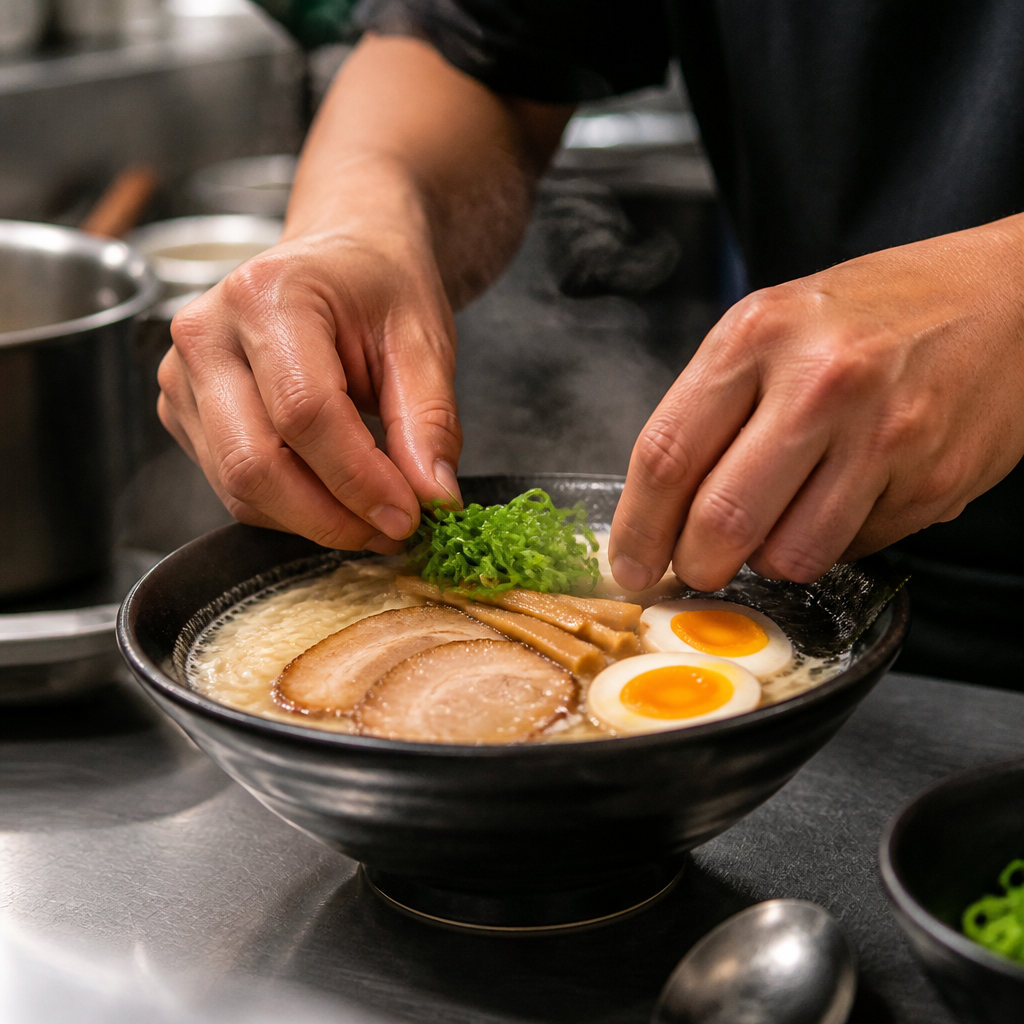
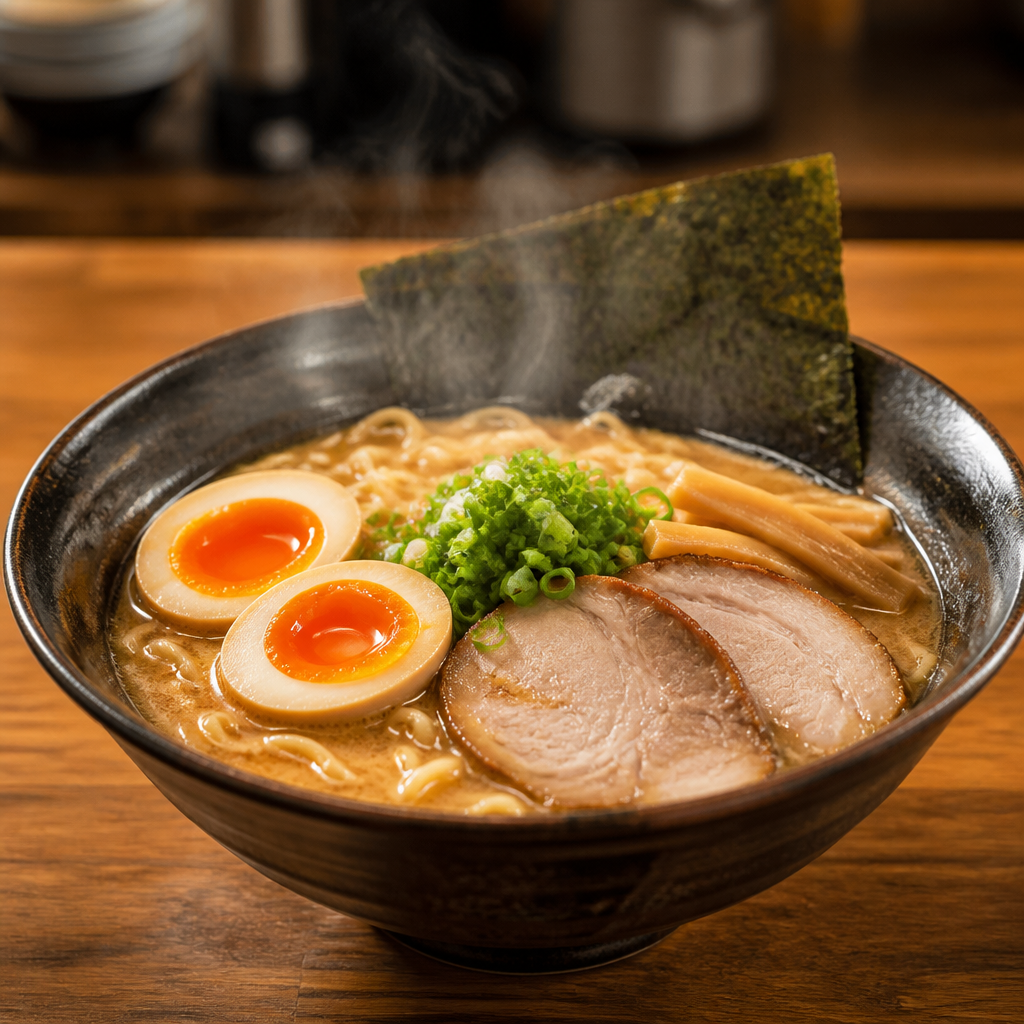
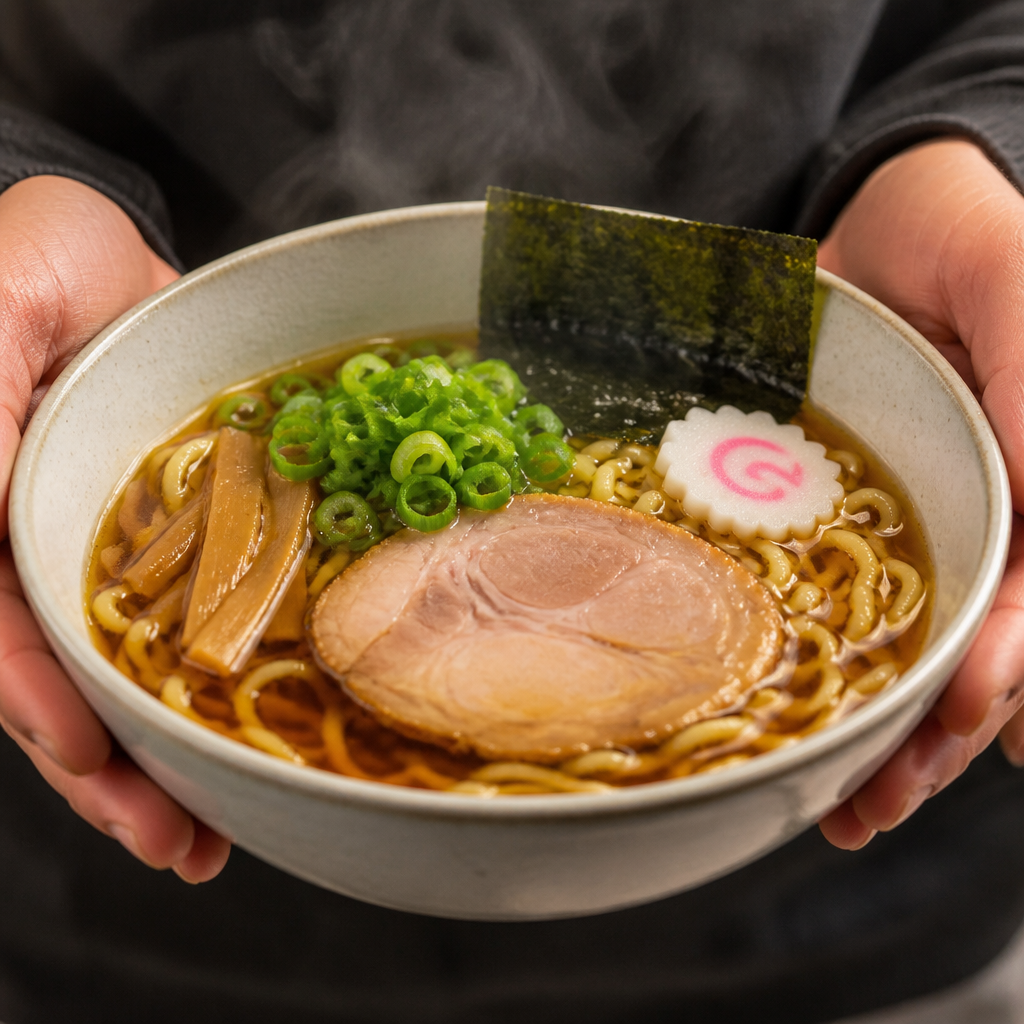
Ramen is widely known as a Japanese noodle soup dish, famous for its Chinese-style wheat noodles served in a flavorful broth. This broth is typically made from meat or fish and seasoned with ingredients like soy sauce or miso paste. Common toppings include sliced pork, nori (dried seaweed), menma (fermented bamboo shoots), and green onions. Although strongly linked to Japan today, ramen's journey actually started in China. The dish arrived in Japan in the late 19th century, with the first ramen shop opening in Yokohama's Chinatown in 1910.
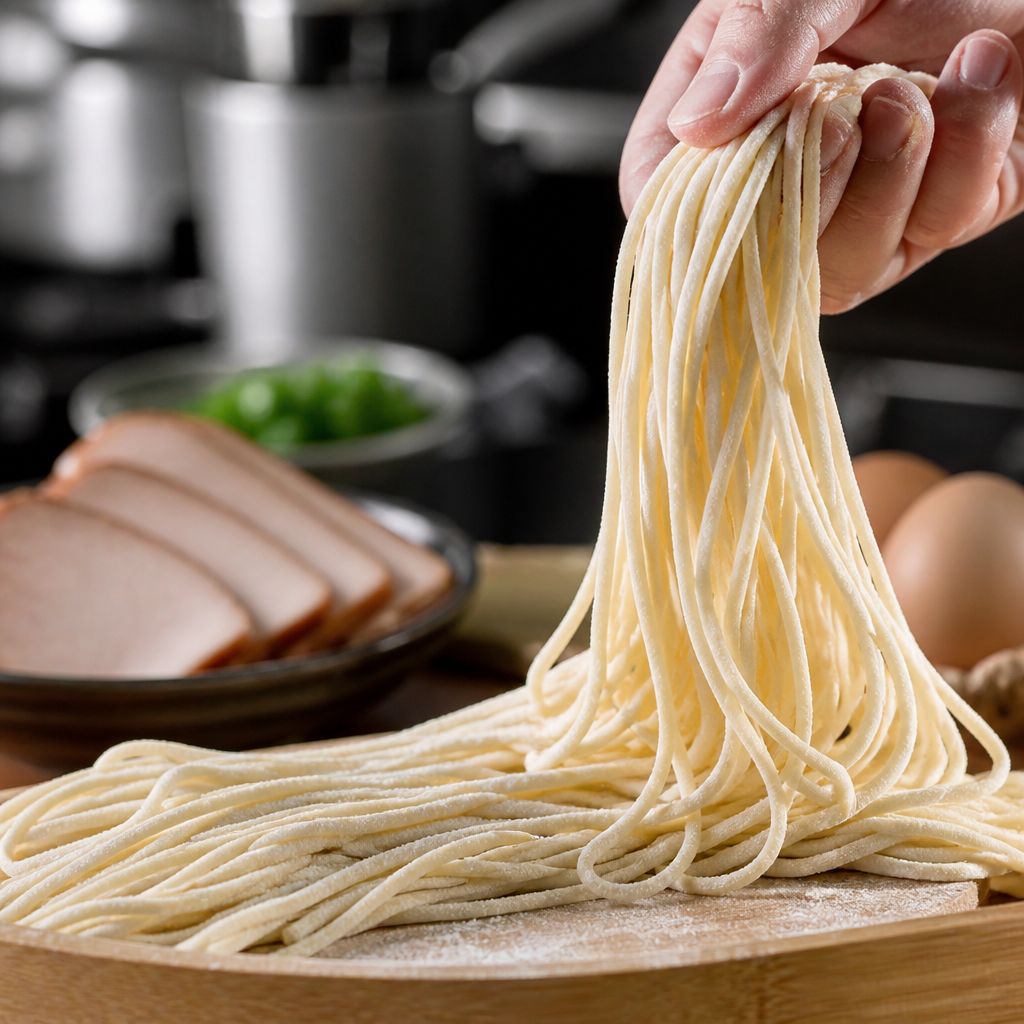
The name "ramen" itself hints at its past, deriving from the Chinese word "lamian" (拉麵), meaning "hand-pulled noodles." This connection highlights China's early influence. However, ramen truly gained popularity in Japan after World War II. During this period, the U.S. imported large quantities of cheap wheat flour, making wheat noodles far more accessible and affordable than traditional rice-based meals. This economic shift significantly contributed to ramen's transformation. _Without the post-war influx of American wheat, ramen may not have become the staple it is today._
George Solt, a history professor and author of "The Untold History of Ramen," explains this evolution.
He notes that "ramen transformed from a Chinese immigrant food into a symbol of Japanese national cuisine through post-war economic conditions and cultural adaptation."
During this era, ramen evolved to suit Japanese tastes and cooking traditions, firmly establishing itself in the country's food scene. A major milestone in ramen's history, and in global food, occurred in 1958 when Momofuku Ando invented the first instant ramen in Japan. This invention made noodle soup quick and easy for people worldwide, further boosting ramen's global presence.
History of Ramen: Japanese or Korean Origins?
To directly answer whether ramen is Japanese or Korean, it's clear that ramen, as a national dish, originated in Japan. Although it was adapted from Chinese noodle traditions brought to Japan in the late 1800s, its development, refinement, and cultural significance as "ramen" all occurred within Japan. Japanese cuisine embraced and transformed this noodle dish, creating a wide array of regional styles and a rich restaurant culture centered around it. This deep history and continuous evolution within Japan firmly establish ramen as a Japanese culinary staple.
In contrast, Korea independently developed its own distinct instant noodle tradition, known as "ramyeon" (라면). This occurred separately from Japan's early ramen development. Samyang Foods, a Korean company, introduced Korea's first instant ramyeon in 1963, five years after Momofuku Ando invented instant ramen in Japan. While Korean ramyeon was directly influenced by Japanese instant ramen technology, it quickly evolved into its own unique food tradition, tailored to Korean palates. This adaptation primarily involved incorporating spicier flavors, a hallmark of Korean cooking.
The cultural distinction between the two is also significant. Japan proudly considers ramen a national dish with a long history of meticulous preparation and culinary innovation in its restaurants, where chefs expertly craft broths and noodles. Korean ramyeon culture, conversely, primarily centers on instant noodles, cherished as a convenient comfort food, often enhanced with various additions at home or in convenience stores.
What are the Differences Between Japanese and Korean Ramen?
While both Japanese ramen and Korean ramyeon are noodle soups, they have evolved along different culinary paths, resulting in significant differences in their preparation, flavors, and cultural roles. Understanding these distinctions helps us appreciate what makes each dish unique.
Difference Between Japanese Ramen and Korean Ramen
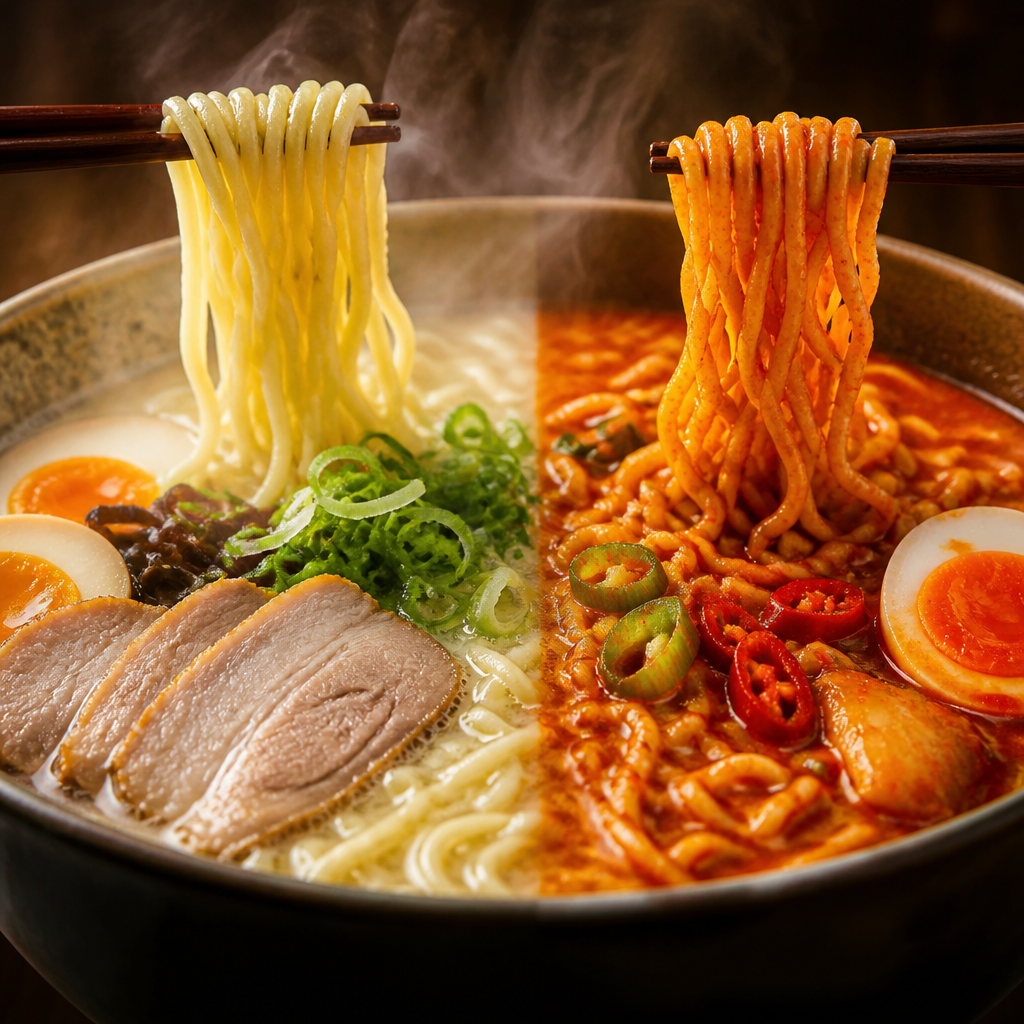
The primary differences between Japanese ramen and Korean ramyeon are evident in several key areas: broth characteristics, noodle texture, spice level, serving methods, and typical toppings. Japanese ramen usually features complex broths that are slow-cooked, often for 12 to 48 hours. These broths are commonly made from pork bones (creating a tonkotsu broth), chicken, or seafood, and are carefully seasoned with soy sauce (shoyu) or fermented soybean paste (miso) to develop deep umami flavors. In contrast, Korean ramyeon generally uses simpler, spicier broths based on gochugaru (Korean chili flakes) and typically include beef or anchovy stock.
Regarding noodle texture, Japanese ramen noodles are usually made fresh. Korean ramyeon noodles, however, are mostly instant and pre-fried or air-dried, giving them a distinctly chewier and more springy texture. Spice level is another significant difference. Korean ramyeon is considerably spicier, with heat levels ranging from mildly hot to extremely fiery, like the Buldak ramyeon varieties. Japanese ramen, conversely, usually focuses on achieving a rich, savory depth. I once participated in a 'Buldak' ramyeon challenge with friends. _Be warned, the spice level is not for the faint of heart and can be a truly fiery adventure!_
| Feature | Japanese Ramen | Korean Ramyeon |
|---|---|---|
| Broth | Complex, slow-cooked (12-48 hrs); based on pork, chicken, or seafood; umami-focused (shoyu, miso). | Simpler, quick to prepare; often spicy with gochugaru; beef or anchovy stock base. |
| Noodles | Typically fresh; texture varies by region (straight, wavy, thick, thin). | Mostly instant (pre-fried or air-dried); chewy and springy texture. |
| Spice Level | Generally mild; focuses on balanced, savory flavors. | Significantly spicier, from mild to extremely hot. |
| Toppings | Chashu pork, marinated egg (ajitsuke tamago), bamboo shoots (menma), seaweed (nori). | Kimchi, processed cheese, spam, fresh vegetables, egg. |
| Serving Style | Primarily a restaurant dish, artistically prepared. | A convenient meal, typically prepared at home or in convenience stores. |
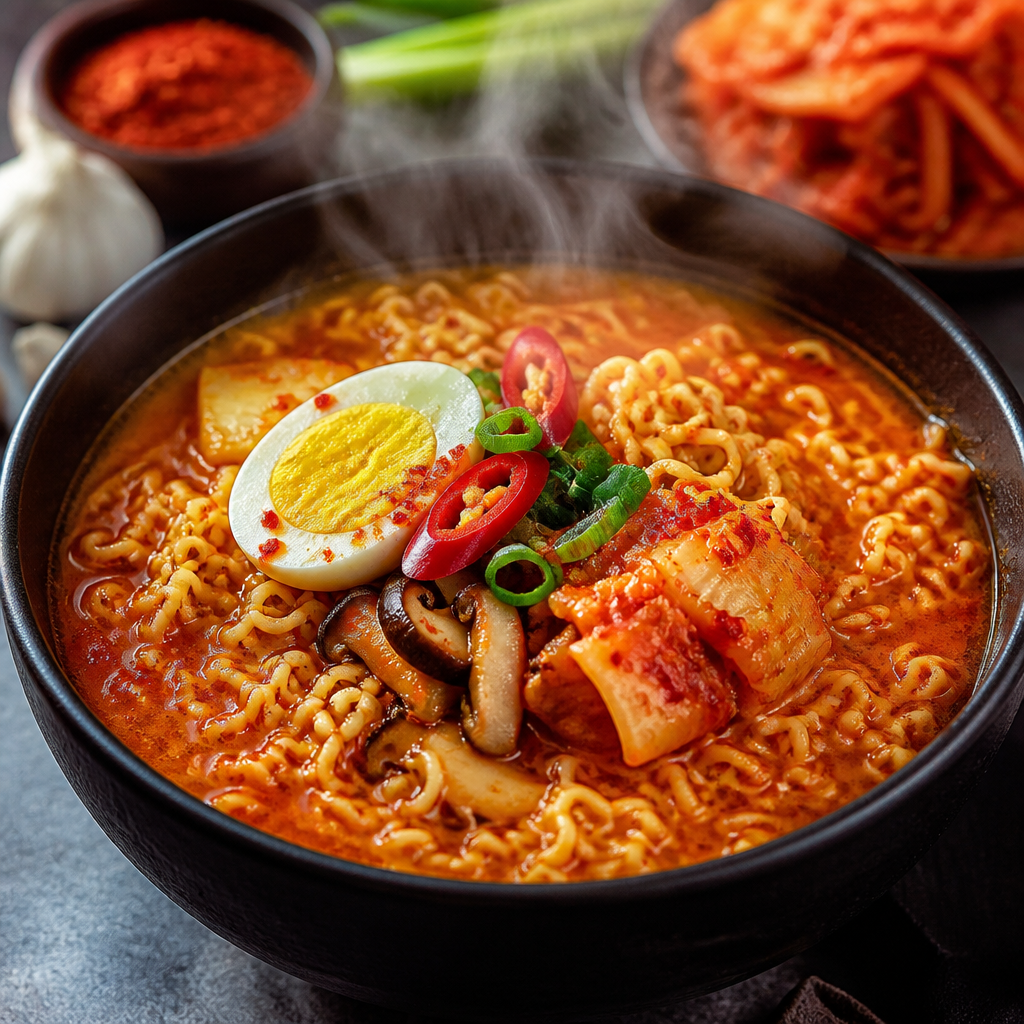
Korean Ramen vs Japanese Ramen Flavor Profiles
The flavor profiles of Korean ramyeon and Japanese ramen reflect different culinary philosophies, with each emphasizing distinct taste experiences. Japanese ramen primarily builds its flavor foundation on umami, achieved through various bases like dashi (a savory broth made from seaweed and dried fish), miso, shoyu, or tonkotsu (pork bone broth). The goal is often a perfect balance between the broth, noodles, and toppings.
In contrast, Korean ramyeon prioritizes a strong, spicy flavor, predominantly from gochugaru-based heat. This spiciness is often combined with other robust flavors like garlic, ginger, and sometimes a hint of sweetness to create a more intense and immediate taste sensation. The seasoning methods also vary significantly. Japanese ramen uses a "tare" system, a concentrated seasoning sauce added to each bowl individually. This method allows for precise flavor control. Korean ramyeon, on the other hand, relies on pre-mixed seasoning packets that provide standardized flavor profiles for convenience.
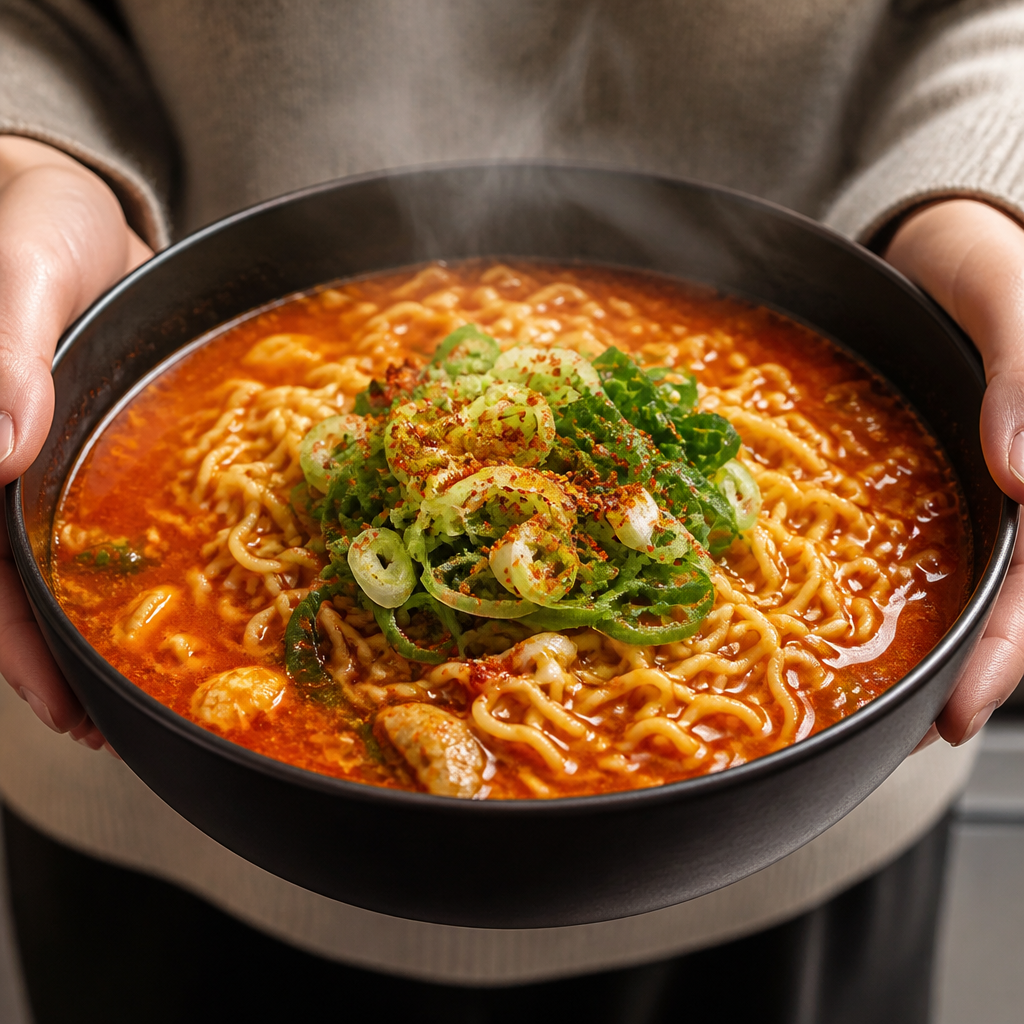
Korean Instant Ramen vs Traditional Japanese Ramen
Comparing Korean instant ramyeon and traditional Japanese ramen reveals clear differences in their preparation, nutritional content, cost, and emerging trends. Traditional Japanese ramen is a dish requiring substantial time and skill. Its preparation involves hours of simmering broth, the careful crafting of fresh noodles, and the artistic arrangement of toppings. In contrast, Korean instant ramyeon is designed for ultimate convenience, requiring only 3-5 minutes to prepare.
From a nutritional standpoint, a typical serving of Korean instant ramyeon generally contains 380-500 calories and 1,500-2,000mg of sodium. Traditional Japanese ramen usually ranges from 450-700 calories with 1,000-1,800mg of sodium but often provides more protein (20-30g) compared to the 10-15g in most instant ramyeon servings. The price also reflects their different roles. A bowl of traditional Japanese ramen in a restaurant costs approximately $5.50-10.50, while a package of Korean instant ramyeon costs $0.80-2.50.
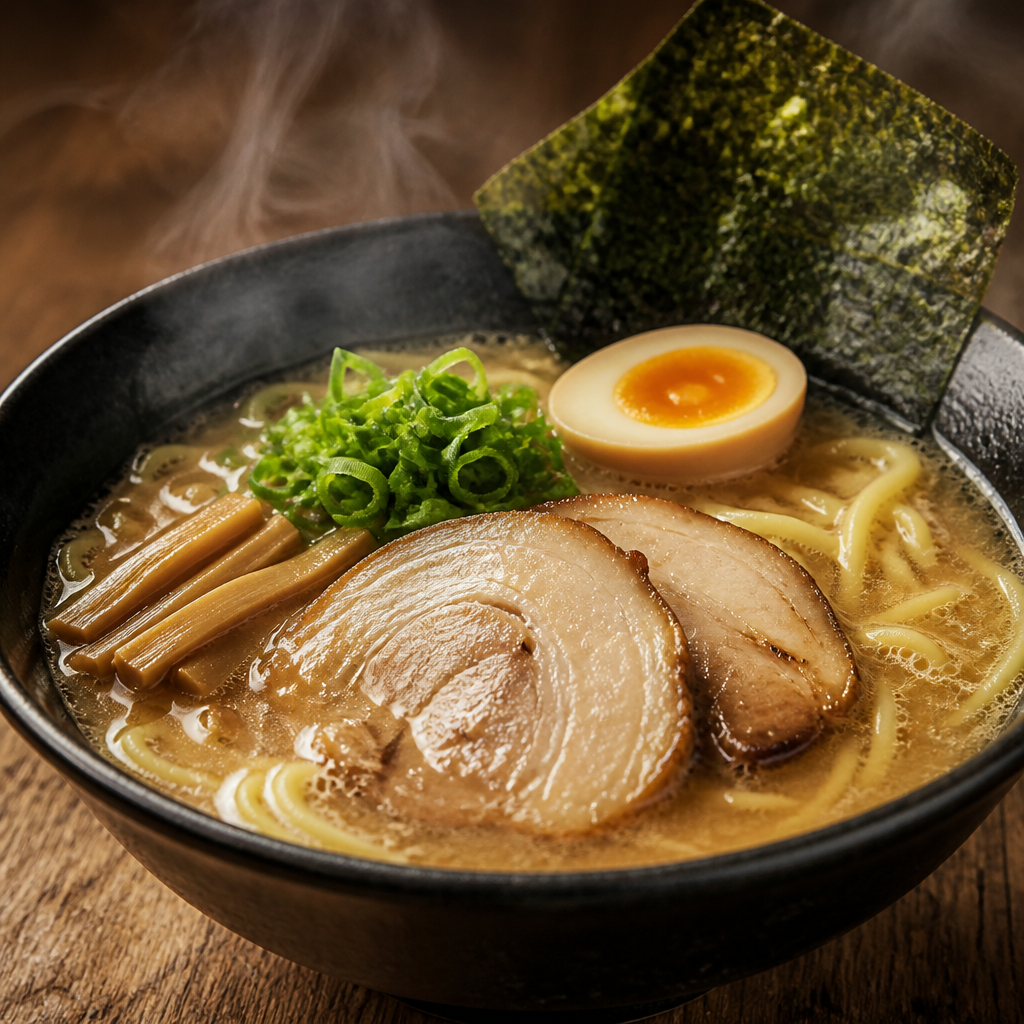
Japanese Ramen Styles and Global Influence
Japanese ramen isn't a single dish; rather, it's a dynamic culinary category featuring numerous regional styles, each offering a distinct flavor experience. This diversity, coupled with strategic global expansion and cultural appeal, has propelled Japanese ramen to worldwide acclaim.
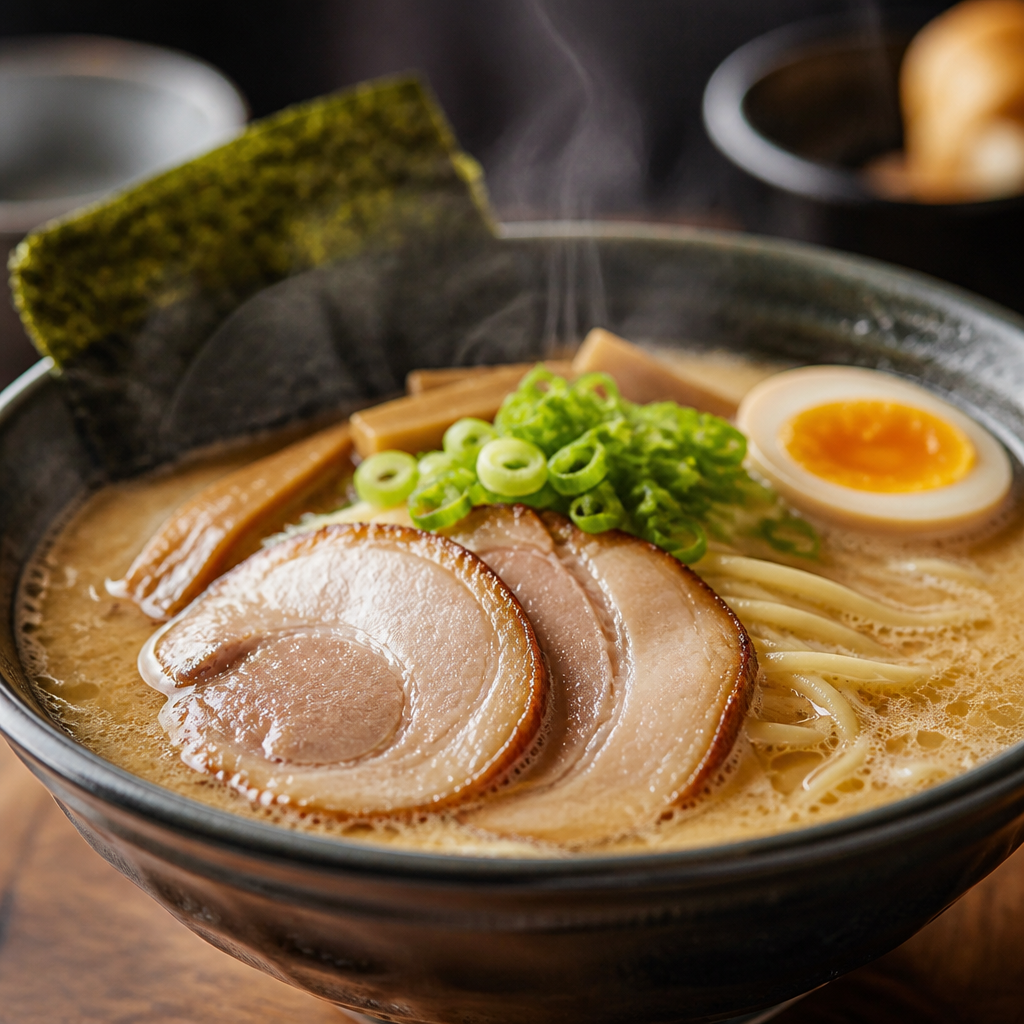
Japanese Ramen Styles and Regional Varieties
Japan boasts an impressive array of ramen styles, with four primary categories forming the foundation of its regional variations: Shoyu, Miso, Shio, and Tonkotsu. Each of these styles originated in different parts of Japan and has developed unique characteristics reflecting local tastes and ingredients. _To truly appreciate these nuances, exploring ramen in its native region is often necessary._
Here are a few prominent examples:
- Tokyo Shoyu Ramen: One of the oldest styles, it features a clear, brown broth made from chicken and dashi, seasoned with soy sauce. It is commonly served with medium-thick, curly noodles.
- Sapporo Miso Ramen: From Hokkaido, this style has a rich, hearty, and often buttery miso-based broth, served with thick yellow noodles and toppings like ground pork and sweet corn.
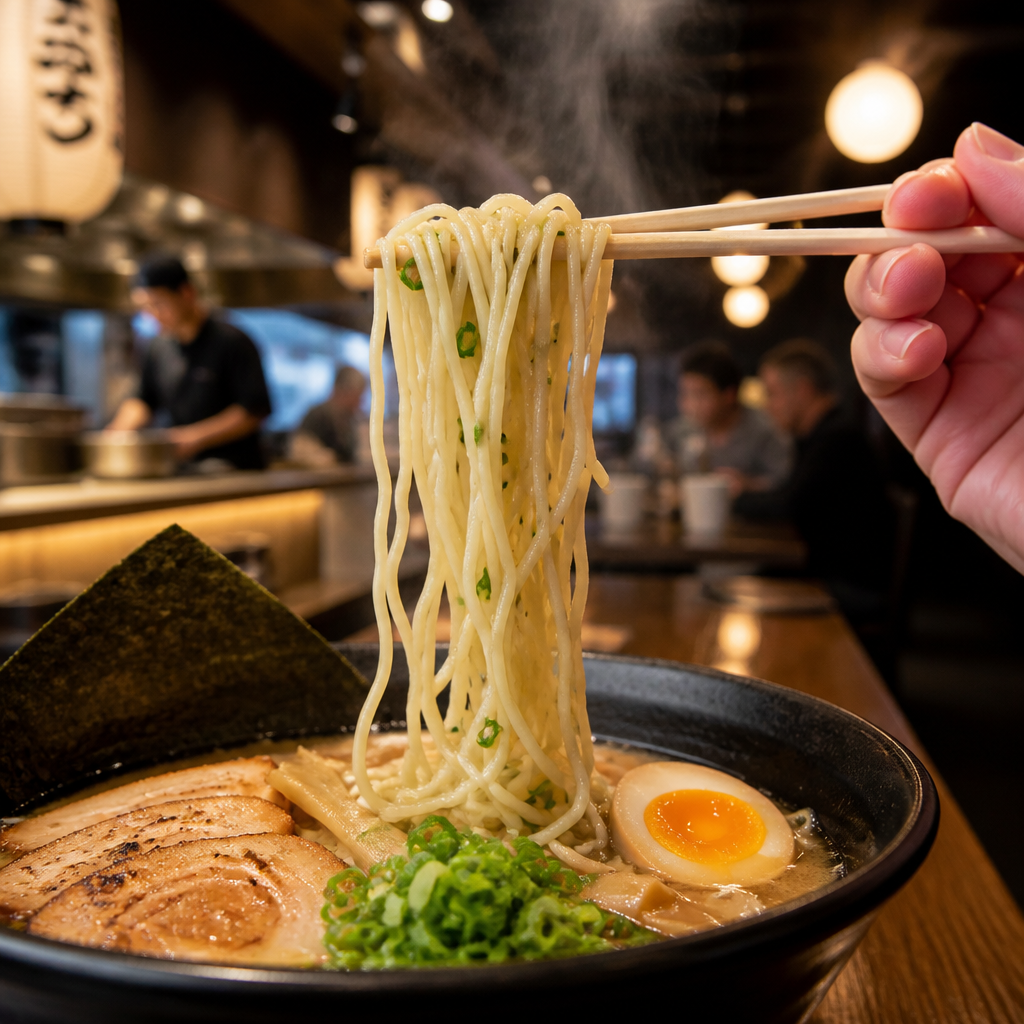
- Hakata Tonkotsu Ramen: From Fukuoka, this style is known for its milky white, opaque broth made by boiling pork bones for over 12 hours. It is served with very thin, straight noodles.
- Kitakata Ramen: From Fukushima, this style is celebrated for its flat, thick, curly noodles with a high water content, giving them a uniquely chewy texture in a light pork and soy sauce broth.
Beyond these, numerous other variations exist, such as Wakayama Ramen (a tonkotsu-shoyu blend) and Tsukemen, a popular dipping-style ramen where noodles are served separately from a concentrated broth.
How Japanese Ramen Became Popular Worldwide
The global ascent of Japanese ramen is a narrative of culinary innovation and cultural diffusion. A pivotal moment was Momofuku Ando's invention of instant ramen in 1958, followed by Cup Noodles in 1971. These products made ramen accessible and affordable globally, with consumption reaching 121.2 billion servings in 2023.
Beyond instant varieties, authentic Japanese ramen garnered international interest through cultural exports like the 1985 film "Tampopo" and the popular anime "Naruto." Dr. Katarzyna Cwiertka, a professor specializing in Japanese food culture, offers this perspective:
"Ramen's global success stems from its adaptability – it can be both a cheap instant meal and a gourmet experience, allowing it to penetrate multiple market segments simultaneously across different cultures."
This appeal is reflected in the dramatic growth of ramen restaurants outside Japan, surging from around 2,500 in 2010 to over 18,000 in 2023. The culinary world further acknowledged ramen's status in 2015 when Tsuta in Tokyo became the first ramen restaurant to receive a Michelin star. The global ramen restaurant market was valued at $24.38 billion in 2022 and is projected to grow by 9.7% annually from 2023 to 2030. This growth is driven by a trend toward authenticity, with restaurants importing equipment and hiring Japanese chefs to ensure a genuine experience.
FAQ
Q1: What is the primary difference in origin between Japanese ramen and Korean ramyeon?
A1: Japanese ramen originated from Chinese noodle traditions introduced to Japan in the late 19th century and was adapted into a distinct Japanese national dish. Korean ramyeon, while influenced by Japanese instant ramen technology, developed separately in Korea as an instant noodle product starting in 1963, evolving with spicier flavor profiles suited to Korean tastes.
Q2: How do the broths of Japanese ramen and Korean ramyeon typically differ?
A2: Japanese ramen usually features complex, slow-cooked broths made from ingredients like pork bones, chicken, or seafood, simmered for hours to achieve deep umami flavors. Korean ramyeon, on the other hand, typically uses simpler, spicier broths based on gochugaru (Korean chili flakes) and beef or anchovy stock, designed for quick preparation.
Q3: What role did instant noodles play in the global popularity of ramen?
A3: The invention of instant ramen by Momofuku Ando in Japan in 1958 was foundational for ramen's global awareness. These convenient products made noodle soup accessible and affordable worldwide, paving the way for broader interest in both instant and traditional ramen varieties.
Q4: Can you describe a few distinct regional styles of Japanese ramen?
A4: Japan has many regional ramen styles. Tokyo Shoyu Ramen features a clear, soy sauce-based broth with chicken and dashi. Sapporo Miso Ramen is known for its rich, miso-based broth often with butter and corn. Hakata Tonkotsu Ramen from Fukuoka is famous for its milky white, creamy pork bone broth and ultra-thin noodles.
Q5: What is the typical price difference between a bowl of traditional Japanese ramen and a package of Korean instant ramyeon?
A5: A bowl of traditional Japanese ramen in a restaurant in Japan typically costs between ¥800-1,500 (approximately $5.50-10.50). In contrast, a package of Korean instant ramyeon is significantly more affordable, usually costing between $0.80-2.50.

Emily Carter is an American food lover who writes about Korean cuisine for people trying it for the first time. She covers what things taste like, how to eat them, and what to cook with them.