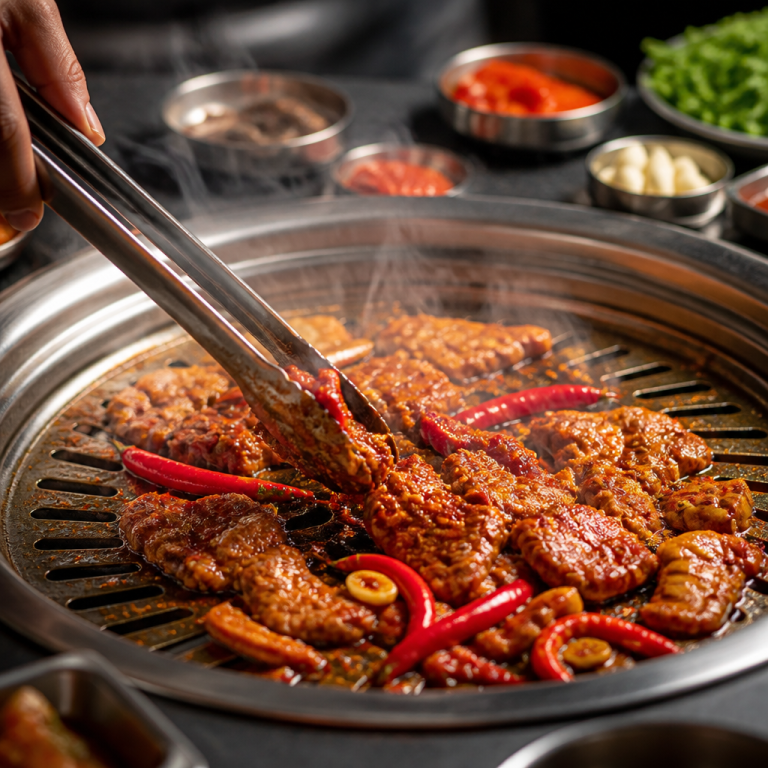
How Does Korean BBQ Work? 5 Tips for a Delicious Feast
Walking into a Korean BBQ restaurant is an immersive experience. The air is thick with the delicious smell of sizzling meat, the sound of lively chatter fills the room, and glowing grills are the centerpiece of every table. This dining style, known as _gogi-gui_ (grilled meat) in Korean, is more than just a meal—it’s a hands-on culinary adventure where you become the chef. Discover the joy of grilling various cuts of beef, pork, or chicken right at your table, accompanied by an endless parade of colorful side dishes called _banchan_ and fresh lettuce wraps.
The tradition of grilling meat in Korea has ancient roots, but the modern restaurant-style experience became popular in Seoul during the 1960s. This evolution turned a home-style cooking method into a communal dining phenomenon, celebrated for its delicious food and emphasis on shared moments. Understanding the different cuts, from sweet marinated _bulgogi_ to savory pork belly, is part of the fun, making every visit a new discovery.
The Korean BBQ Restaurant Experience
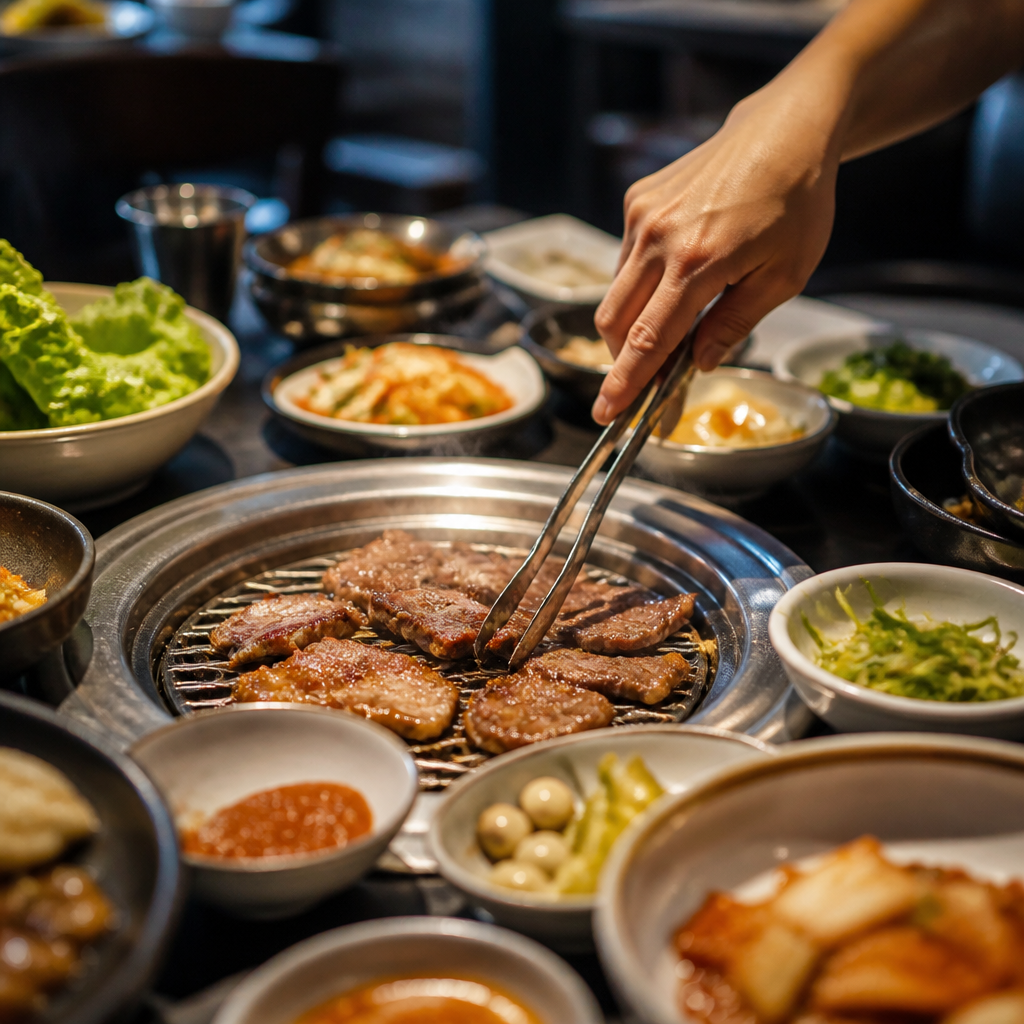
How does korean bbq work at a restaurant?
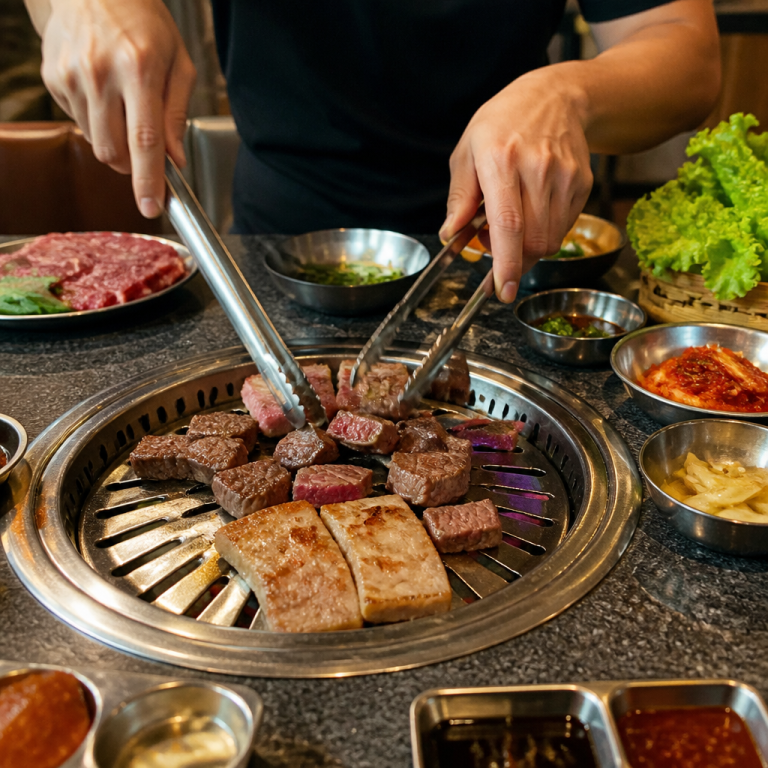
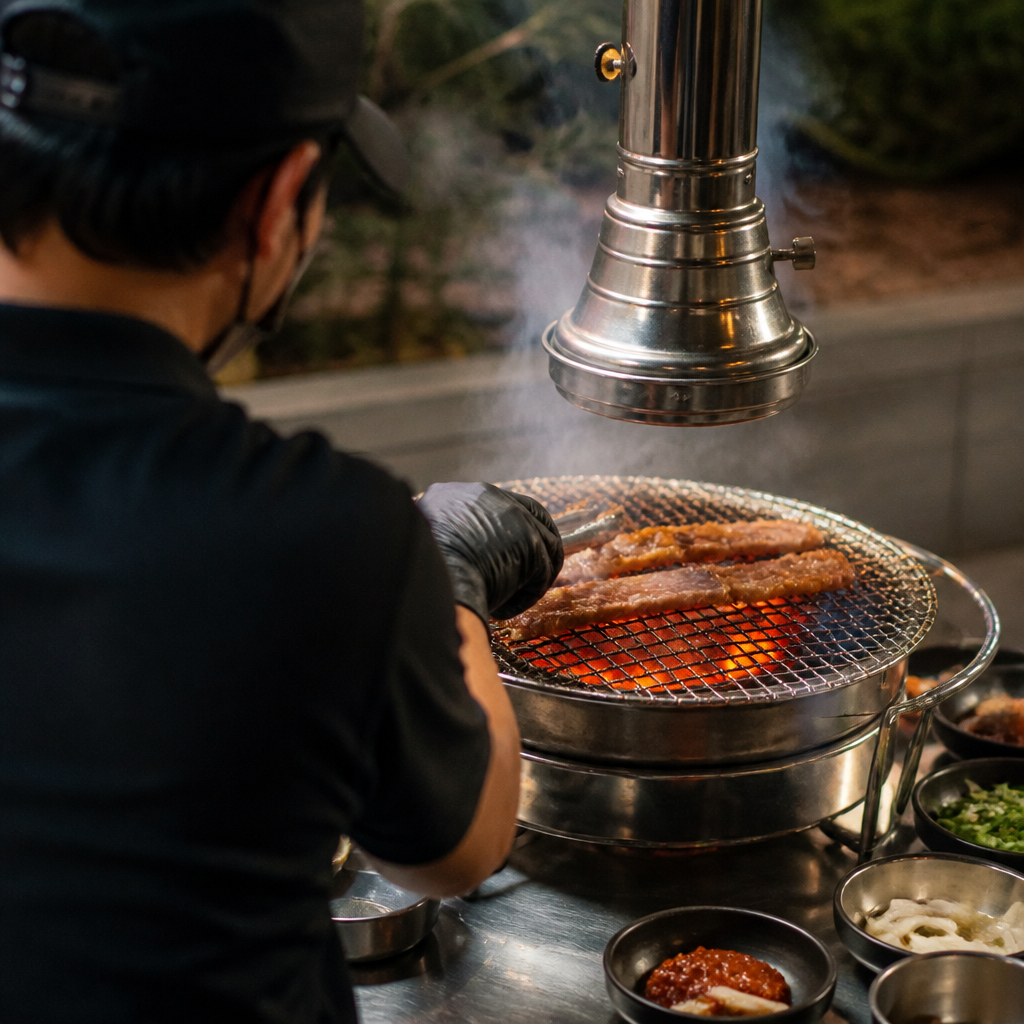
A Korean BBQ restaurant is a vibrant space centered around tables with built-in grills, which can be powered by charcoal, gas, or electricity. Diners cook raw, beautifully marbled meat to their liking, creating a truly interactive meal. While you are the chef, restaurant staff are always on hand to offer assistance, especially for first-timers.
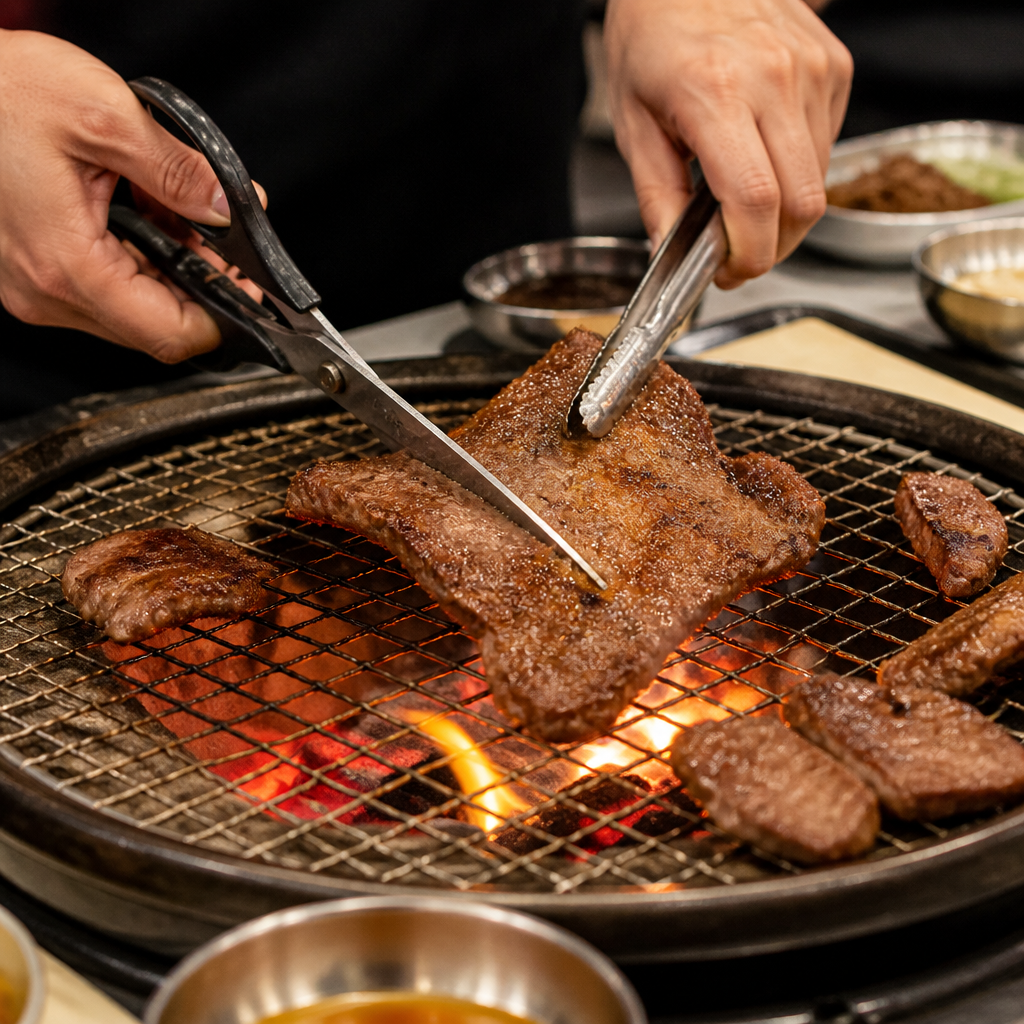
The dining process begins with ordering your preferred meats and drinks. Shortly after, a colorful array of _banchan_ (complimentary side dishes) arrives. Then, the main event starts: grilling the meat. Once cooked, the meat is often wrapped in fresh lettuce with sauces and garnishes to create a personalized wrap called a “ssam.” Servers play an integral role, replacing charred grill grates and often using large scissors to cut cooked meat into bite-sized pieces. Pricing is typically either à la carte (ordering individual portions) or all-you-can-eat (AYCE), which offers unlimited meat for a set time. To enhance the experience, observe basic etiquette. Korean BBQ is inherently a communal meal, so the grilled meat is meant to be shared. _Always use the provided tongs for handling raw meat, not your personal chopsticks, to maintain hygiene._
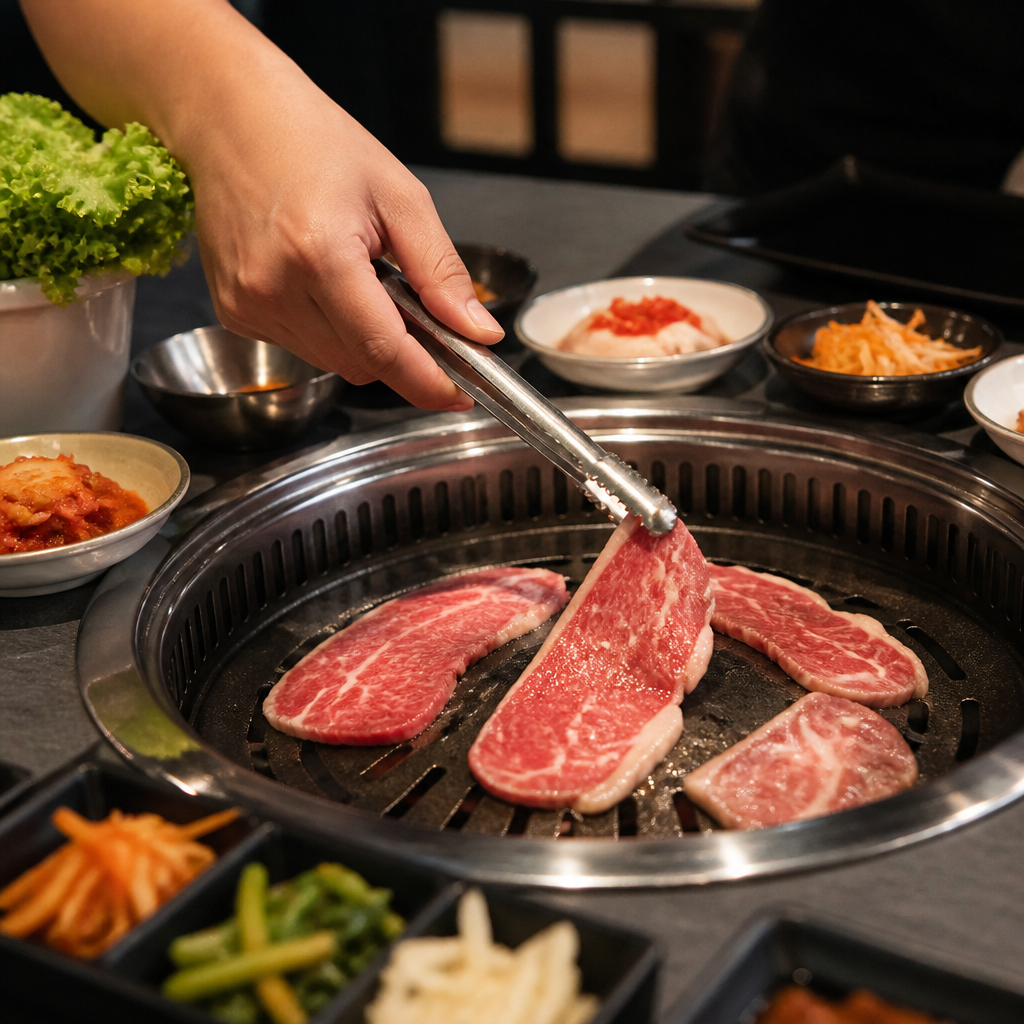
How does korean bbq work for beginners?
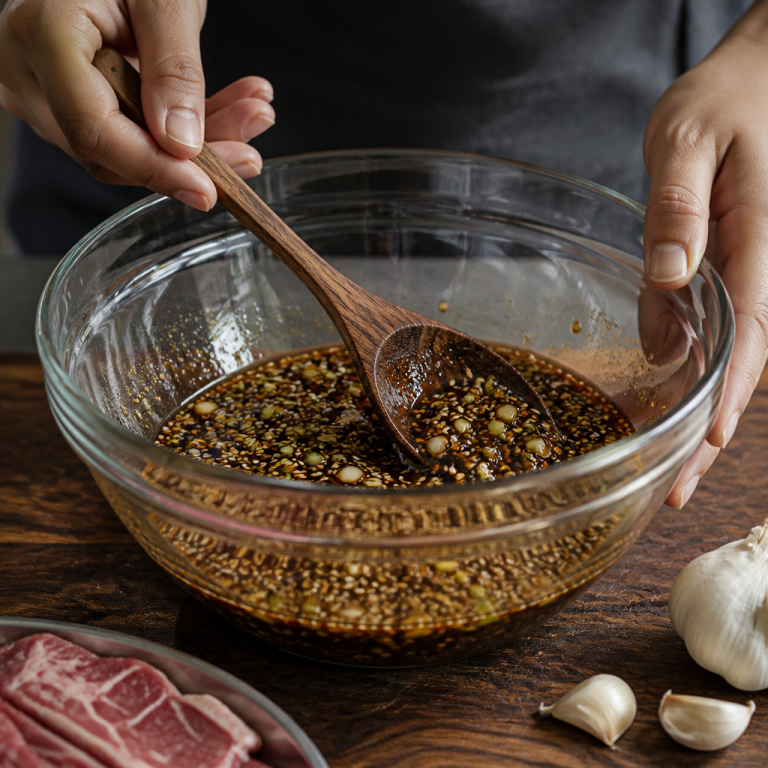
For those new to the vibrant world of Korean BBQ, the experience is incredibly rewarding. A great starting point for first-time diners is to opt for pre-marinated meats such as _bulgogi_ (marinated beef) or _galbi_ (marinated short ribs). These cuts are more forgiving to grill, as the marinades help keep the meat tender and flavorful. Don’t hesitate to ask your server for guidance; they are happy to offer tips to ensure you have a positive first experience.
Beginners should avoid common pitfalls like overcrowding the grill, which steams the meat rather than searing it, and flipping the meat too often. Thin cuts like _chadolbaegi_ (beef brisket) cook in seconds, so watch them closely. A typical K-BBQ meal is a harmony of essential components that create the perfect bite.
- Grilled Meat: The star of the show, cooked at your table.
- Ssam: Fresh lettuce or perilla leaves used for wrapping the meat.
- Ssamjang: A savory, fermented soybean paste that adds an umami kick.
- Kimchi & Banchan: The iconic fermented cabbage and 5-10 other side dishes provide a refreshing balance to the rich meat.
As renowned chef David Chang advises, “For beginners, don’t be afraid to ask the server for help—Korean BBQ staff expect questions and often prefer to demonstrate proper technique rather than watch customers struggle or waste expensive meat.”
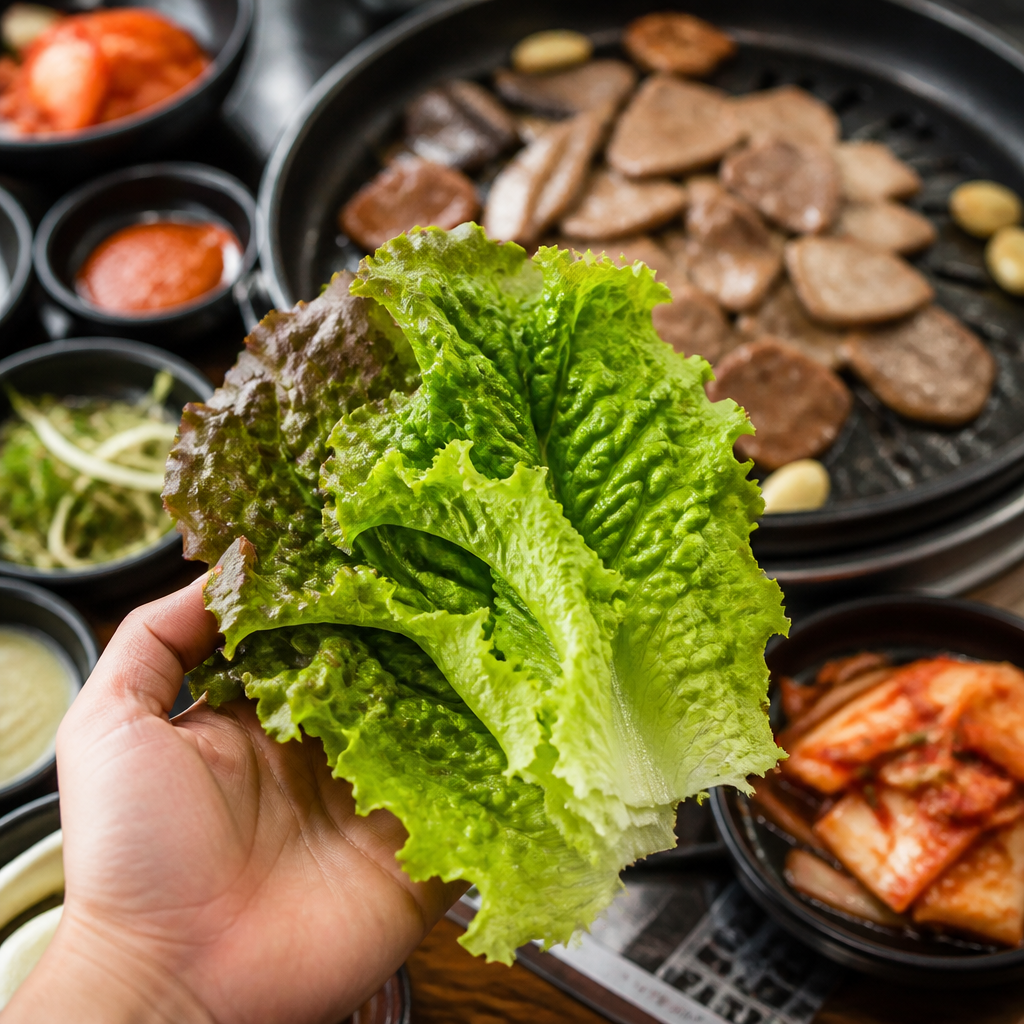
How does korean bbq work ordering and cooking?
The ordering process at a Korean BBQ restaurant is flexible. Diners order meat by the portion, and servers bring the raw, prepared plates to the table. You can place additional orders throughout your meal, and the complimentary _banchan_ are automatically provided and are usually refillable.
Proper Korean BBQ cooking involves preheating the grill to a high temperature before placing any meat to achieve a good sear. Place meat in a single layer, allowing it to sear for 1-2 minutes before flipping. For larger cuts, use scissors to cut the meat into bite-sized pieces on the grill for even cooking. Temperature control is critical; charcoal grills can reach 500-700°F, while gas grills offer adjustable medium-high heat. Timing depends on the cut, so it’s helpful to know the basics.
| Meat Cut | Common Name | Average Grilling Time (per side) |
|---|---|---|
| Thinly Sliced Brisket | Chadolbaegi | 15-30 seconds |
| Pork Belly | Samgyeopsal | 3-4 minutes |
| Marinated Short Ribs | Galbi | 2-3 minutes |
| Thicker Unmarinated Cuts | Varies | 4-5 minutes |
How does korean bbq work with banchan side dishes?
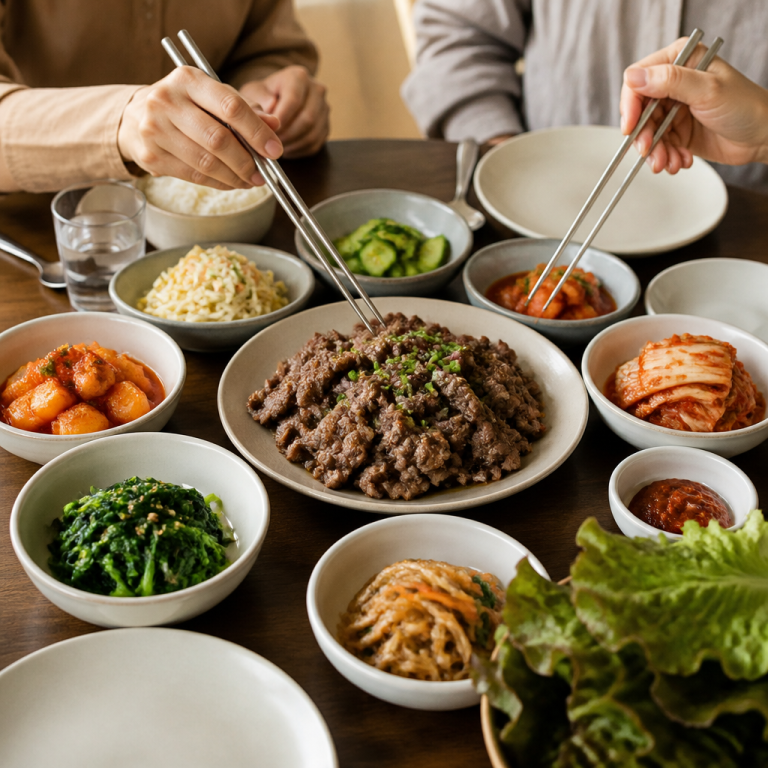
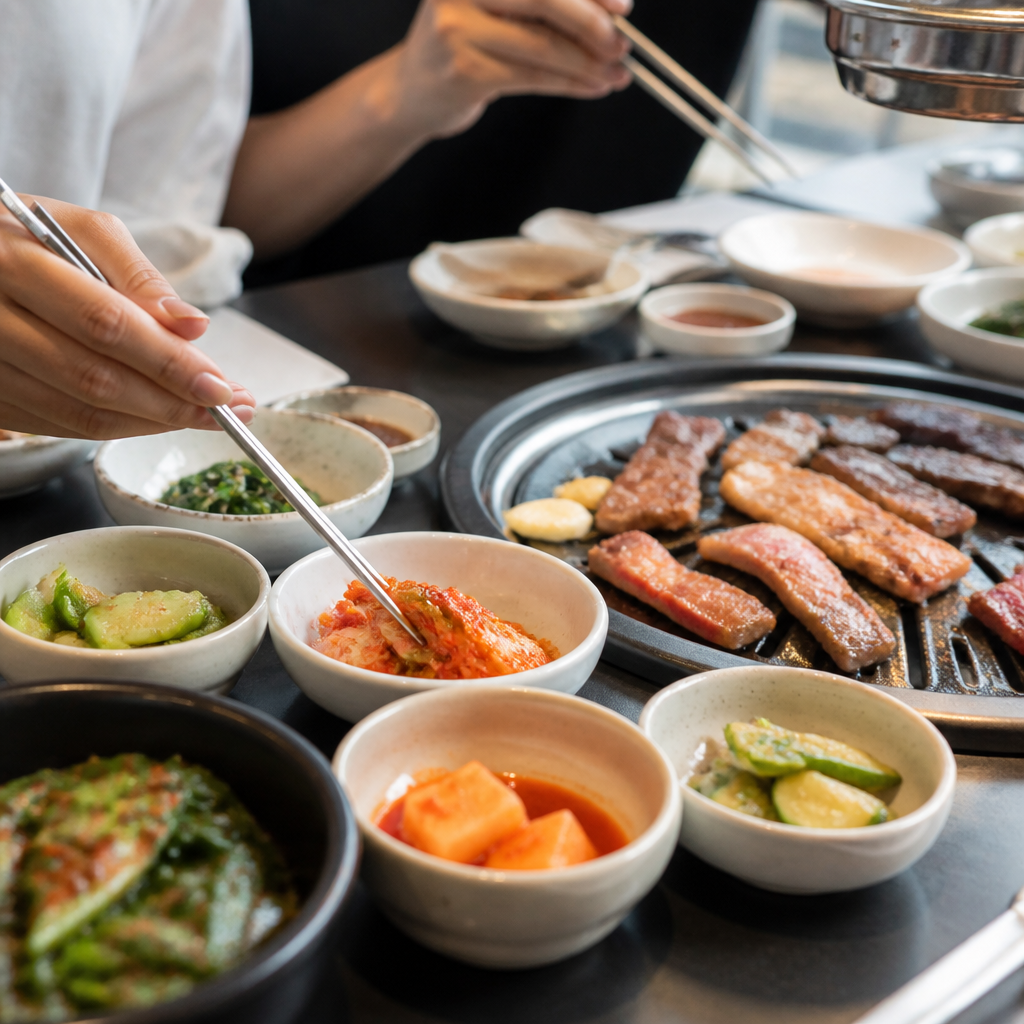
_Banchan_ (반찬) are small, complimentary side dishes that are an indispensable part of the Korean dining experience. They arrive automatically and add a burst of flavor, texture, and color to your meal. Common varieties include napa cabbage kimchi, seasoned bean sprouts (_kongnamul_), seasoned spinach (_sigeumchi-namul_), and refreshing cucumber kimchi (_oi-sobagi_).
Far from being mere accompaniments, _banchan_ are carefully selected to provide a crucial contrast to the richness of the grilled meats. Their acidic, fermented, and spicy notes prevent palate fatigue and act as excellent palate cleansers. This allows you to reset your taste buds between different courses of meat. At most restaurants, refills of _banchan_ are complimentary and unlimited. You can eat them on their own or, more popularly, add them to your _ssam_ wrap along with the grilled meat for a perfect, harmonious bite.
The Korean BBQ Grilling Process
How does korean bbq work grilling process explained?
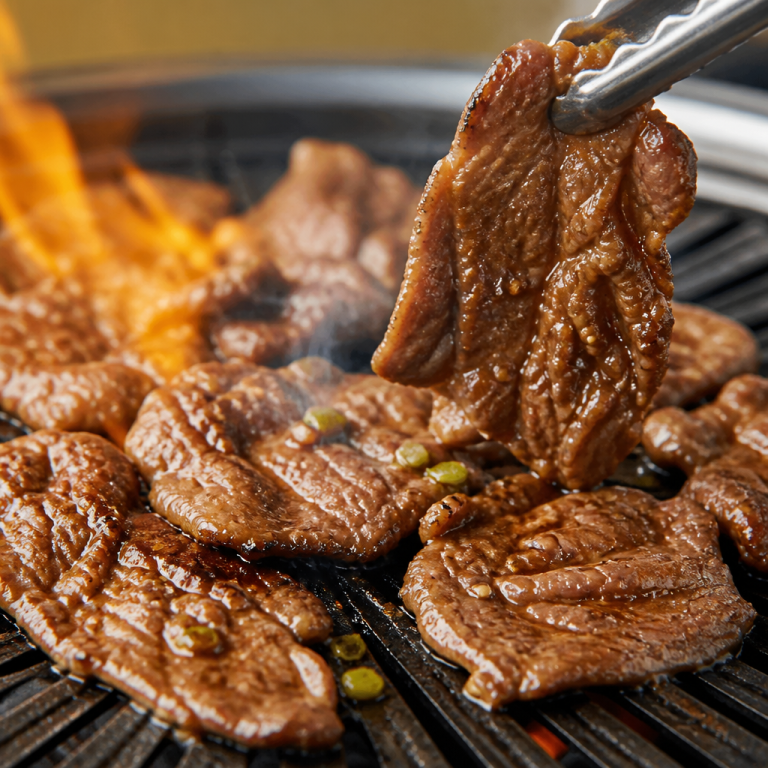
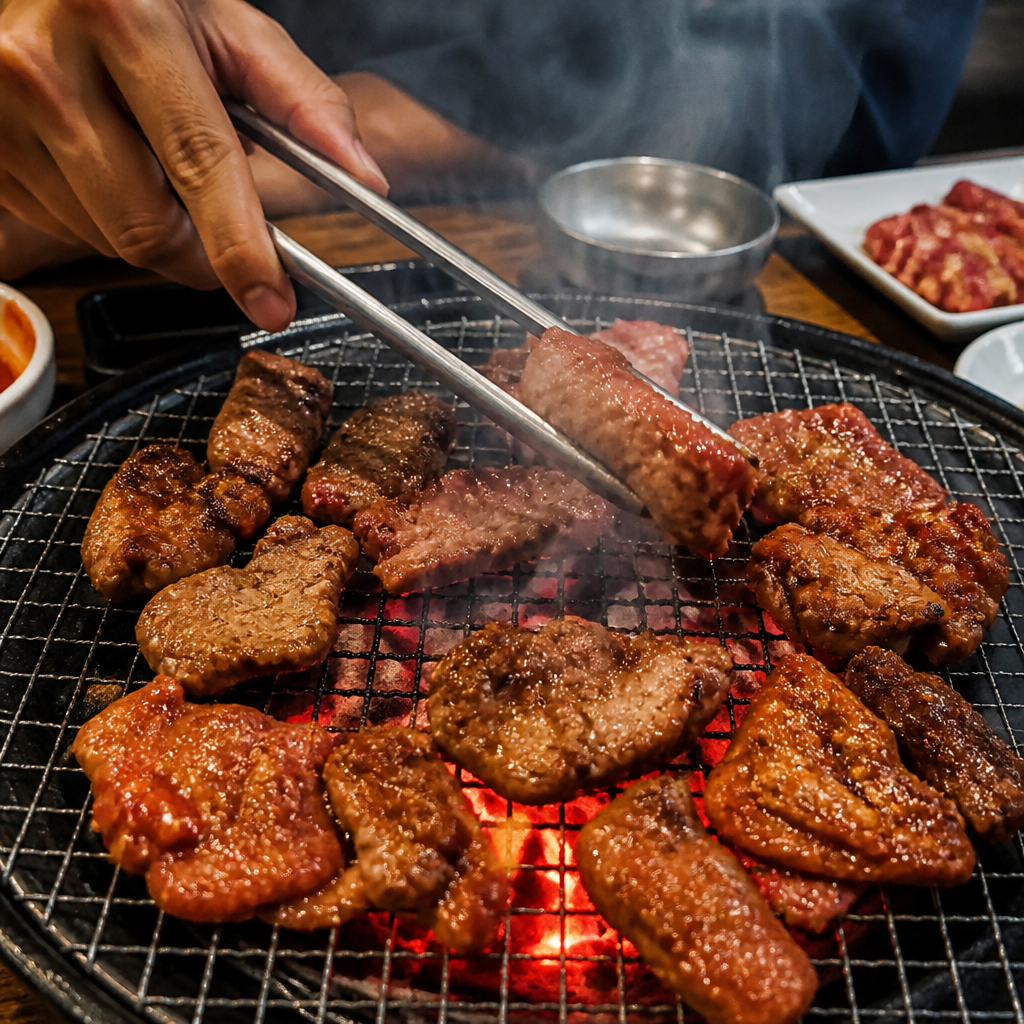
The Korean BBQ grilling process is an engaging culinary dance. It begins with preheating the grill to a high temperature to get a proper sear. Once hot, place the meat in a single layer without overlapping. The key to perfect Korean BBQ is patience and high heat—let the meat develop a proper crust before flipping it. Look for juices beading on the surface as a sign it’s ready to be turned. For larger cuts, use scissors to cut them into smaller pieces directly on the grill.
Effective grilling involves using different heat zones. The hot center is for searing, while the medium-heat edges are for slower cooking. As meat cooks, move it to the cooler edges of the grill to keep it warm without overcooking. This technique differs for marinated meats like _bulgogi_, which can burn quickly due to their sugar content, versus unmarinated meats like pork belly, which benefit from high heat to develop a crispy texture. For fatty cuts, allow enough time for the fat to render and become crispy. _It’s important to periodically remove any excessive rendered fat to prevent flare-ups._
How does korean bbq work with charcoal vs gas grills?
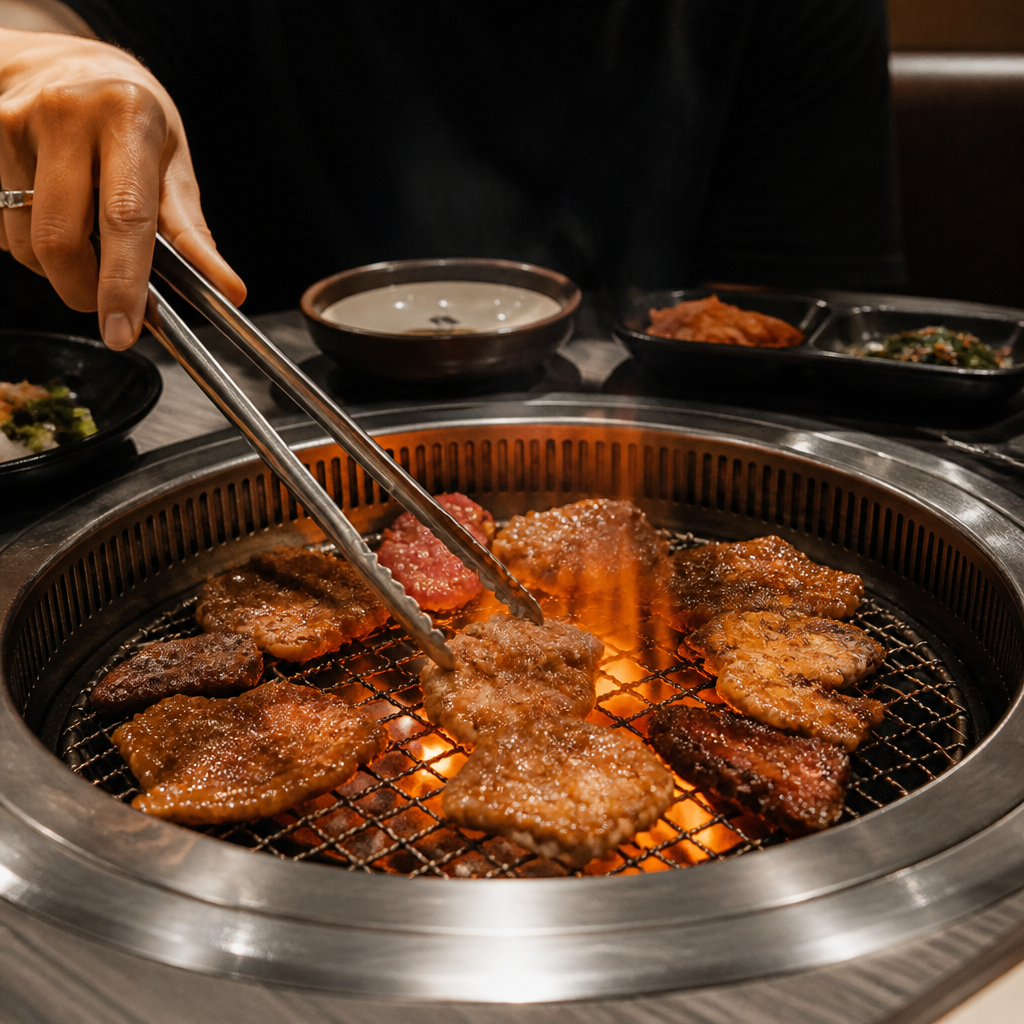
The choice of grill significantly influences the flavor. Traditional charcoal grills are prized for the distinctive smoky flavor they impart and the superior sear from their intense heat (600-700°F). Many purists believe this smoky essence is indispensable for authentic Korean BBQ.
In contrast, gas grills offer convenience, precise temperature control, and less smoke, making them a popular choice in modern restaurants. While gas grilling results in a cleaner meat flavor that allows the marinade to shine, charcoal produces a more complex taste profile. The choice often comes down to a personal preference for the complex, smoky depth of charcoal versus the cleaner flavor profile achieved with gas. Scientific studies have even found that charcoal-grilled meat contains higher levels of specific flavor compounds that contribute to a richer aroma and savory taste. Restaurant trends reflect this; charcoal remains dominant in South Korea, while gas and electric grills are more common in the United States due to building codes and operational practicalities.
Chef Roy Choi, founder of Kogi BBQ, notes, “While purists argue charcoal is essential for authentic Korean BBQ, modern high-BTU gas grills can achieve 90% of the flavor and texture when properly preheated—the real difference comes down to technique and meat quality rather than fuel source alone.”
FAQ
Q1: What is the main difference between Korean BBQ and other types of BBQ?
A1: The primary distinction of Korean BBQ is its interactive, table-top grilling experience. Diners cook raw meat themselves at built-in grills, often sharing the cooking and eating process communally, accompanied by numerous complimentary side dishes (_banchan_) and fresh wraps (_ssam_).
Q2: What are some popular meats to order for Korean BBQ, especially for beginners?
A2: Popular meat cuts include _bulgogi_ (marinated beef), _galbi_ (marinated beef short ribs), _samgyeopsal_ (pork belly), and _chadolbaegi_ (beef brisket). For beginners, pre-marinated meats like _bulgogi_ or _galbi_ are often recommended as they are more forgiving to grill and come with pre-infused flavors.
Q3: What are _banchan_, and how are they typically consumed during a Korean BBQ meal?
A3: _Banchan_ are small, complimentary side dishes served with Korean BBQ, such as _kimchi_, pickled vegetables, and seasoned greens. They are eaten alongside the grilled meat, often included in _ssam_ wraps, or consumed as palate cleansers between bites to balance the rich flavors of the meat. Refills are usually free and unlimited.
Q4: What are some common mistakes beginners make when grilling at Korean BBQ, and how can they be avoided?
A4: Common mistakes include overcrowding the grill, flipping meat too frequently, and overcooking thin cuts. To avoid these, place meat in a single layer, allow it to sear properly for 1-2 minutes before flipping, and keep a close eye on thin cuts like _chadolbaegi_ which cook very quickly (15-30 seconds per side). Don’t hesitate to ask servers for assistance.
Q5: What is the difference in flavor and experience between charcoal and gas grills in Korean BBQ?
A5: Charcoal grills, often reaching higher temperatures (600-700°F/315-370°C), impart a distinctive smoky flavor and achieve superior caramelization, offering a more traditional experience. Gas grills provide precise temperature control, instant heat, and cleaner burning with less smoke, resulting in a cleaner meat flavor. While purists prefer charcoal for its complex taste, modern gas grills can also deliver excellent results.

Emily Carter is an American food lover who writes about Korean cuisine for people trying it for the first time. She covers what things taste like, how to eat them, and what to cook with them.